Wednesday, 31 August 2022

More Volatility Ahead for Bitcoin as Federal Reserve Keeps Quiet – CoinDesk

Please note that our privacy policy, terms of use, cookies, and do not sell my personal information has been updated.

The leader in news and information on cryptocurrency, digital assets and the future of money, CoinDesk is a media outlet that strives for the highest journalistic standards and abides by a strict set of editorial policies. CoinDesk is an independent operating subsidiary of Digital Currency Group, which invests in cryptocurrencies and blockchain startups. As part of their compensation, certain CoinDesk employees, including editorial employees, may receive exposure to DCG equity in the form of stock appreciation rights, which vest over a multi-year period. CoinDesk journalists are not allowed to purchase stock outright in DCG.

©2022 CoinDesk

TikTokIcon


from Bitcoin – My Blog https://ift.tt/i8qWS7B
via IFTTT
https://downloads.coindesk.com/cd3/svg_files/icons/TikTokIcon.svg
https://stockinvesthub.blogspot.com/2022/08/more-volatility-ahead-for-bitcoin-as.html

Stock futures fall after Wall Street closed out August with losses – CNBC

High chance Fed will pivot due to recession, Quadratic Capital CIO suggests

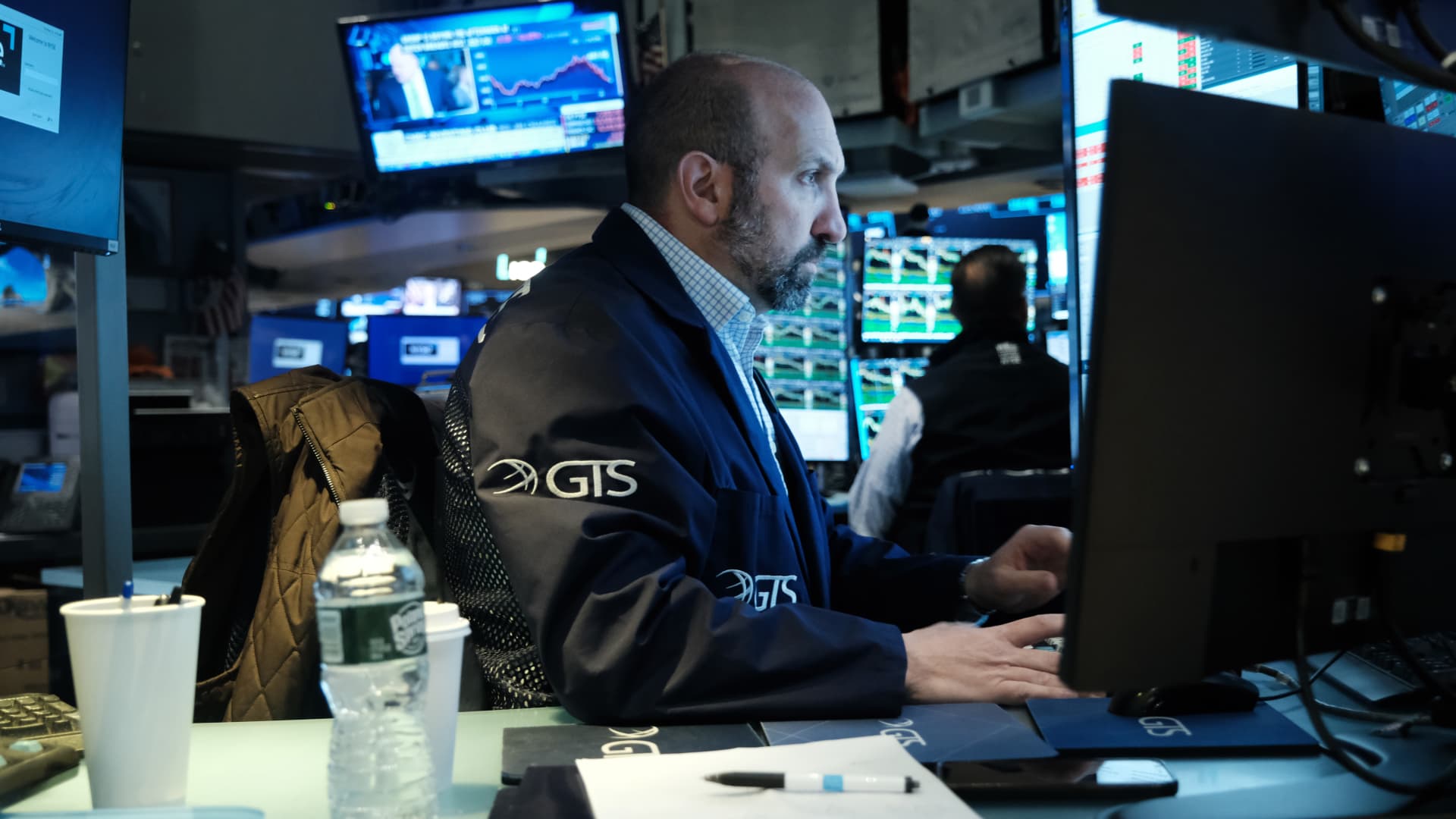
U.S. stock futures fell slightly on Wednesday night after the major averages closed out August with losses and investors considered the Federal Reserve’s fight against inflation.

Dow Jones Industrial Average futures fell by 42 points, or 0.13%. S&P 500 and Nasdaq 100 futures declined 0.27% and 0.48%, respectively.

Those moves follow four straight days of losses in the major averages. On the final day of August, the Dow Jones Industrial Average slid nearly 0.9%. The S&P 500 lost about 0.8%, and the Nasdaq Composite fell roughly 0.6%.

The Dow closed the month down about 4.1%, while the S&P and Nasdaq recorded losses of 4.2% and 4.6%, respectively.

Investors are debating whether stocks will again challenge the June lows in September, a historically poor month for markets, after weighing recent hawkish comments from Fed officials who show no signs of easing up on interest rate hikes.

On Wednesday, Cleveland Federal Reserve President Loretta Mester said she expects interest rates to rise above 4% before the central bank can start pulling back. The current fed funds rate is 2.25%-2.50.

“If we retest the lows, I think it happens in September,” SoFi’s Liz Young said Wednesday on CNBC’s “Closing Bell: Overtime.”

However, she added, “I think in order to do so, something would have to get materially worse than it was on June 16,” when stocks bottomed, such as earnings revisions that come in worse than investors are expecting.

Techyrack Website stock market day trading and youtube monetization and adsense Approval

Adsense Arbitrage website traffic Get Adsense Approval Google Adsense Earnings Traffic Arbitrage YouTube Monetization YouTube Monetization, Watchtime and Subscribers Ready Monetized Autoblog


from Stock Market News – My Blog https://ift.tt/62A4Sc1
via IFTTT
https://image.cnbcfm.com/api/v1/image/107112272-16619824284ED3-FM-A-BLOCK-2-083122.jpg?v=1661982426&w=750&h=422&vtcrop=y
https://stockinvesthub.blogspot.com/2022/08/stock-futures-fall-after-wall-street.html

Bitcoin falls 15% in August, and how the Merge will cut Ethereum’s energy use – CNBC

Share

CNBC Crypto World features the latest news and daily trading updates from the digital currency markets and provides viewers with a look at what’s ahead with high-profile interviews, explainers, and unique stories from the ever-changing crypto industry. On today’s show, Omid Malekan of Columbia Business School discusses how The Merge will change Ethereum’s energe consumption.

08:43

4 hours ago


from Bitcoin – My Blog https://ift.tt/ylen5h4
via IFTTT
https://image.cnbcfm.com/api/v1/image/107112155-083122_CW_Thumb.jpg?v=1661971996&w=1920&h=1080
https://stockinvesthub.blogspot.com/2022/08/bitcoin-falls-15-in-august-and-how.html

Market Wrap: Bitcoin’s Price Rises Amid Uncertainty – CoinDesk

U.S. Equities: The S&P 500, Dow Jones Industrial Average and the tech-heavy Nasdaq Composite all traded down slightly on Wednesday, at least partly because of the tepid ADP jobs figure. The DJIA, Nasdaq and S&P 500 fell 0.9%, 0.6% and 0.8% respectively.


from Bitcoin – My Blog https://ift.tt/C6dNyFr
via IFTTT
https://www.coindesk.com/resizer/EvBs32oBnJFIUma8nlC3G2aZHVY=/1200x628/center/middle/cloudfront-us-east-1.images.arcpublishing.com/coindesk/NA4XSRGBVNDHZBNOTZJV3HXQDQ.jpg
https://stockinvesthub.blogspot.com/2022/08/market-wrap-bitcoins-price-rises-amid.html

Cryptocurrency company accidentally transfers $10.5m to Australian woman and doesn’t notice for seven months – The Guardian

Cryptocurrency trading platform Crypto.com accidentally transferred $10.5m to an Australian woman when processing a $100 refund, and failed to notice the error for seven months.

The company – which paid Hollywood star Matt Damon to feature in a Super Bowl commercial with the slogan “fortune favours the brave” – discovered it had accidentally transferred the fortune to Melbourne woman Thevamanogari Manivel in December 2021, seven months after the error was made.

Crypto.com, which operates as Foris GFS in Australia, had paid out $10.5m instead of a $100 refund after Manivel’s account number was accidentally entered into the payment amount field.

The company launched legal action in the Victorian supreme court this year, and in February was granted a freeze on Manivel’s Commonwealth Bank account, but most of the money had been transferred to other accounts – which were later frozen.

The court heard that $1.35m of the money had been used to buy a four-bedroom home in Craigieburn in Melbourne’s north in February, and the ownership of the property was then transferred into the name of Manivel’s sister, Thilagavathy Gangadory, who lives in Malaysia.

Attempts to serve Gangadory the freezing orders were unsuccessful, as she never responded to emails from Crypto.com’s solicitors. The only communication provided to the court was an email reply to Manivel’s solicitors saying “received, thank you”.

Manivel’s solicitors informed Crypto.com that Gangadory was “seeking legal advice”, the court heard.

As a result, a default judgment was awarded to Crypto.com to force Gangadory to sell the property as soon as possible, with the money to go to Crypto.com, as well as interest in the amount of $27,369.64 and costs.

Crypto.com declined to comment on the case while it was before the court.

In June, Crypto.com said it was sacking 260 of its employees due to the cryptocurrency market downturn. But the Verge reported the company had quietly laid off many more , and not told other staff.

The downturn in the cryptocurrency market came just months after the AFL announced a five-year partnership with Crypto.com to become the “official cryptocurrency exchange and trading platform for the AFL and the AFLW”.

Crypto.com said in May that it remained fully committed to the deal.

“We are well financed, and these are multiyear contracts, which will continue to play a crucial role in our mission to accelerate the world’s transition to cryptocurrency,” a spokesperson said.


from Cryptocurrency – My Blog https://ift.tt/74EKX1r
via IFTTT
https://i.guim.co.uk/img/media/aa51c89ff7c43b3daea7f51c954b10c2a0b05901/0_403_5087_3053/master/5087.jpg?width=1200&height=630&quality=85&auto=format&fit=crop&overlay-align=bottom%2Cleft&overlay-width=100p&overlay-base64=L2ltZy9zdGF0aWMvb3ZlcmxheXMvdGctZGVmYXVsdC5wbmc&enable=upscale&s=f2e3936f3daf77736cee2700736cb88f
https://stockinvesthub.blogspot.com/2022/08/cryptocurrency-company-accidentally.html

Tuesday, 30 August 2022

Bitcoin could become a zero-emission network: Report – Cointelegraph

A pro-Bitcoin mining report from self-proclaimed philanthropist Daniel Batten has claimed that Bitcoin could become a zero-emission network.

The report builds upon data from the Bitcoin Mining Council to understand the impact of carbon-negative energy sources on Bitcoin’s (BTC) overall carbon footprint. Following an investigation and extrapolation of the results, it claims to then “predict when the entire Bitcoin network becomes a zero emission network.”

But how does the network become carbon-negative in the first place? Put simply, by combusting stranded methane gas to mine BTC that would have otherwise been emitted into the atmosphere. The study finds that this process, which already happens worldwide, reduces the network’s emissions by 63%.

“That means that the 1.57% of the Bitcoin network using carbon-negative sources have a -4.2% impact on the carbon intensity of the Bitcoin network.”

The study uses data from various flare gas BTC miners, including Crusoe Energy in Colorado, Jai Energy in Wyoming and Arthur Mining in Brazil. It also touches upon miners using waste gases from animal waste — such as those in Slovakia — to illustrate that Bitcoin mining can positively impact the environment by preventing the emission of harmful methane gases.

While central bankers and mainstream media continue to snipe at Bitcoin’s energy-intensive mining process, it appears that mining could be a viable route to cutting emissions. According to a report from the United Nations, “Cutting methane is the strongest lever we have to slow climate change over the next 25 years.” By eliminating gas flaring or animal waste biogas emissions, Bitcoin miners around the world are working toward the zero-emission goal. 

Cointelegraph reporter Joe Hall interviewed a Northern Irish farmer who recently began trialing Bitcoin mining. Owen, the farmer, told Cointelegraph that mining Bitcoin using farm waste emitting biogas that otherwise would have gone up into the atmosphere “makes sense.”

Owen, atop an anaerobic digester and in front of a Bitcoin mine, talks to Cointelegraph.

Owen partnered with Scilling Digital Mining, an Irish company that seeks out renewable energy to use for Bitcoin mining. In a nod to further adoption across Ireland, Mark Morton — managing director at Scilling — told Cointelegraph:

“Daniel [Batten] has done phenomenal work showcasing Bitcoin mining’s methane capture capability. The plaudits for these unfussy energy consumers are only just beginning, and Ireland’s farmers could be the next big adopters of this incredible technology.”

Morton added that “Bitcoin mining will be the catalyst for widespread small-scale, off-grid anaerobic digestion adoption leading to less farm waste, more decentralized network hash rate and lower agricultural emissions.” Farming is responsible for one-third of Irish greenhouse gas emissions, so capturing waste gas from farming could not only clean up the polluting farming industry but also earn extra revenue through mined BTC.

Related: Banking uses 56 times more energy than Bitcoin: Valuechain report

Batten, the report’s author, is an environmentalist who devotes his time to researching Bitcoin and energy consumption. Before advocating for environmentalism through Bitcoin mining, Batten was a philanthropist and venture capitalist.

During a remote presentation at Surfin’ Bitcoin over the weekend, he shared why Bitcoin mining has become his “most important mission.” In the presentation, he made a case for methane capture and stressed the urgency of climate change.


from Bitcoin – My Blog https://ift.tt/5ZmRxMp
via IFTTT
https://s3.cointelegraph.com/uploads/2022-08/121c9139-9819-46c3-9de5-529b4218fb10.png
https://stockinvesthub.blogspot.com/2022/08/bitcoin-could-become-zero-emission.html

Stocks have now given up half of their summer rally. Watch these levels next – CNBC

Techyrack Website stock market day trading and youtube monetization and adsense Approval

Adsense Arbitrage website traffic Get Adsense Approval Google Adsense Earnings Traffic Arbitrage YouTube Monetization YouTube Monetization, Watchtime and Subscribers Ready Monetized Autoblog


from Stock Market News – My Blog https://ift.tt/Xvp7dVa
via IFTTT
https://image.cnbcfm.com/api/v1/image/107101234-NYSE-Trading-Floor-OB-Photo-220809-CC-PRESS-3.jpg?v=1660063663&w=1920&h=1080
https://stockinvesthub.blogspot.com/2022/08/stocks-have-now-given-up-half-of-their.html

Investor Indifference Follows Bitcoin’s Break Above $20,000 – NewsBTC

Bitcoin has been seeing a lackluster performance in the last couple of weeks, and crypto investors have responded in kind to this. After a couple of weeks of tethering above $20,000, the digital asset’s price had finally fallen below this important technical point, triggering outflows in the market. For the past week, institutional investors have continued to feel the fatigue in the market, so while there were outflows, they still remain quite muted.

Bitcoin Loses $29 Million

Bitcoin outflows have continued into another week. This has now brought outflows for the digital asset into three consecutive weeks with no signs of a reversal. The total came out to $29 million in outflows for the week. It marked another week where bitcoin had sent the majority of outflows, although others had recorded outflows.

The inflows were more localized to short bitcoin, which once more speaks to the bearish sentiment that is brewing among bitcoin investors. Despite not being large by previous margins, the $1 million into short BTC shows that institutional investors continue to exercise caution when investing in the market. 

Bitcoin price chart from TradingView.com

It is understandable, given the stance that the Fed has taken when it comes to the economy. In a bid to get inflation rates under control, the Fed has taken what is known as a “hawkish” stance, causing investors to cling tightly to capital.

Outflows Remain The Order Of The Day

Outflows were not only recorded in bitcoin alone, although it was the focus for the week. The second-largest cryptocurrency by market cap, Ethereum also saw outflows totaling $1 million for the same time period. Investors had been very bearish on the digital asset until the announcement of the Merge changed sentiment. However, it is obvious that the bullish sentiment did not last very long. 

Digital asset investment products, just like bitcoin, have now marked their third consecutive week of outflows. It saw outflows reaching $27 million for the week. The majority of the outflows had come from three countries, including the US, Sweden, and Germany, with a combined total of $26.5 million.

Interestingly, minor outflows had flowed into other DeFi platforms such as Solana, Cardano, Uniswap, Tezos, and Chainlink. Most of the inflows had come from Brazil, with a total of $1.2 million.

The market, in general, is still struggling despite bitcoin recovering above $20,000 once more. There is very weak momentum which makes this a seller’s market. 

Featured image from Forbes, chart from TradingView.com

Follow Best Owie on Twitter for market insights, updates, and the occasional funny tweet…


from Bitcoin – My Blog https://ift.tt/N0zFwoq
via IFTTT
https://www.tradingview.com/x/zn6yzEFU/
https://stockinvesthub.blogspot.com/2022/08/investor-indifference-follows-bitcoins.html

Bitcoin sinks, the FBI’s DeFi warning, and what’s next for bitcoin’s biggest fans – CNBC

Share

CNBC Crypto World features the latest news and daily trading updates from the digital currency markets and provides viewers with a look at what’s ahead with high-profile interviews, explainers, and unique stories from the ever-changing crypto industry. On today’s show, Crypto World takes a look at what’s next for bitcoin maximalists ahead of the Ethereum Merge.

06:17

2 hours ago


from Bitcoin – My Blog https://ift.tt/eBoWtMA
via IFTTT
https://image.cnbcfm.com/api/v1/image/107111518-083022_CW_Thumb.jpg?v=1661885941&w=1920&h=1080
https://stockinvesthub.blogspot.com/2022/08/bitcoin-sinks-fbis-defi-warning-and.html

Stock Market Today: Dow Slides, Bed Bath & Beyond Slumps – Barron’s

Wall Street saw its worst day in months last Friday.

Angels Weiss/AFP via Getty Images

Stocks dropped again on Tuesday as markets continue a recent Federal Reserve-induced decline. Investors are nervous that interest rates will keep rising, with one key rate hitting a new high.

The Dow Jones Industrial Average slid 308.12 points, or 1%. The S&P 500 dropped 1.1% and the Nasdaq Composite declined 1.1%. All three indexes began the day higher.

It has been a rough few weeks for stocks. The S&P 500 already came into Tuesday down just over 6% from its mid-August peak following a summer rally, with weakness driven by Fed Chair Jerome Powell’s emphatic speech that put hopes for a Fed pivot to bed once and for all (we hope) as the central bank fights inflation.

“For now, stocks continue to drift lower …and interest rates are drifting higher,” wrote Louis Navellier, founder of Navellier & Associates. 

The latest murmur out of the central bank came from Minneapolis Fed President Neal Kashkari, who told Bloomberg on Monday that he was “happy” to see how Powell’s Jackson Hole speech was received by a stock market selloff. Kashkari said that it was a sign that investors understand how seriously the Fed is committed to getting inflation down to 2%.

That has sent rates to multiyear peaks. The 2-year Treasury yield, which attempts to forecast the level of the federal-funds rate a couple of years from the present, ticked up to 3.466%, to close at a new high for the year.

That’s not what the stock market wants to see after the indexes had rallied by double digits in percentage terms from the 2022 low in June through mid-August. The 2 year yield’s slight breakout “was like an anchor around the neck of equity markets,” wrote Michael Reinking, senior market strategist at New York Stock Exchange. 

Now, the S&P 500 is below its 50-day moving average, which indicates a slight weakening of confidence in the market’s ability to trend higher.

In any event, the market’s real test this week comes Friday. That’s when the Bureau of Labor Statistics publishes the August employment report. Economists expect 318,000 jobs to have been added, which would be down from 528,000 in July. A cooling jobs market might be a good sign for the stock market because it could mean the Fed can slowly take its foot off the brakes. A jobs number too hot, on the other hand, would spur bets that the Fed remain aggressive in lifting rates, hurting stocks.

“Employment is key to what the markets will do this Friday,” wrote NatAlliance Securities’ Andrew Brenner . 

It’s a bad-news-is-good-news world once again.  

Here are some stocks on the move Tuesday:

Baidu (ticker: BIDU) fell 6.5% after the Chinese internet giant posted earnings and revenue ahead of Wall Street’s expectations. The group notched earnings of $2.36 a share on revenue of $4.4 billion in the three months to the end of June, firmly outpacing analysts’ estimates of a profit of $1.54 a share on $4.3 billion in revenue.

Bed Bath & Beyond (BBBY) slid 9.3%, reversing earlier gains, one day ahead of its investor update.

Gap (GPS) stock gained 2% after getting upgraded to Equal Weight from Underweight at Barclays. 

Pinduoduo (PDD) stock rose 0.7% after getting upgraded to Buy from Hold at HSBC. 

American Outdoor Brands (AOUT) stock rose 17% after getting upgraded to Buy from Neutral at B. Riley Securities. 

MakeMyTrip (MMYT) stock gained 2.2% after getting upgraded to Buy from Neutral at Bank of America.

Write to Jacob Sonenshine at jacob.sonenshine@barrons.com and Jack Denton at jack.denton@dowjones.com

Techyrack Website stock market day trading and youtube monetization and adsense Approval

Adsense Arbitrage website traffic Get Adsense Approval Google Adsense Earnings Traffic Arbitrage YouTube Monetization YouTube Monetization, Watchtime and Subscribers Ready Monetized Autoblog


from Stock Market News – My Blog https://ift.tt/946f2Bn
via IFTTT
https://images.barrons.com/im-594034?width=619&height=413
https://stockinvesthub.blogspot.com/2022/08/stock-market-today-dow-slides-bed-bath.html

Monday, 29 August 2022

Historic charts suggest the stock market could have a solid finish to the year, Cramer says – CNBC

Longtime technical analyst Larry Williams sees the potential for Wall Street to finish out the year on a relatively solid note, CNBC’s Jim Cramer said Monday.

Williams put the Dow Jones Industrial Average’s 2022 performance in comparison with the blue-chip index’s performance in previous years to see if history might offer clues for the final four months of trading. The technician found the years 2014, 1962 and 1891 all presented some similarities to this year, Cramer said.

“These historical analogues tend to be pretty hit or miss, but when you look at the years with the closest fit to 2022, the charts — as interpreted by Larry Williams — suggest that the rest of the year’s looking pretty darn good,” the “Mad Money” host said. “Despite what we went through last week, he’s a buyer, not a seller.”

Cramer presented a chart of Williams’ work that overlays the Dow’s 2022 action alongside its 1962 trajectory.

Technical analyst Larry Williams compares the Dow’s performance this year to its performance in 1962.

“Mad Money with Jim Cramer”

They “might as well be joined at the hip,” Cramer said. “The 1962 analogy says we could have a very nice run in November and December after some sideways action” in September and October turbulence, he said.

For an in-depth look at Larry Williams’ work on historic analogues, watch the full video of Cramer’s explanation below:

Jim Cramer’s Guide to Investing

Click here to download Jim Cramer’s Guide to Investing at no cost to help you build long-term wealth and invest smarter.

Techyrack Website stock market day trading and youtube monetization and adsense Approval

Adsense Arbitrage website traffic Get Adsense Approval Google Adsense Earnings Traffic Arbitrage YouTube Monetization YouTube Monetization, Watchtime and Subscribers Ready Monetized Autoblog


from Stock Market News – My Blog https://ift.tt/xgnhMa1
via IFTTT
https://image.cnbcfm.com/api/v1/image/107060205-gettyimages-1396871737-dscf1636_20220512101812300.jpeg?v=1660235938&w=1920&h=1080
https://stockinvesthub.blogspot.com/2022/08/historic-charts-suggest-stock-market.html

Bitcoin whale addresses are accumulating- What could it mean for price – AMBCrypto News

Out of the $123.13 million taken out of the cryptocurrency market in the last 24 hours, Bitcoin [BTC] liquidations within the same period totaled $25.30 million, data from Coinglass revealed. 

As of this writing, the king coin exchanged hands at $19,857.00. It last traded at this level in July when the bulls took over the market and initiated an uptrend.

Since FUD was thrown into the market by Jerome Powell’s Friday (19 August) comment, BTC had declined by 7%.

According to data from Santiment, despite the consistent decline in the price of BTC, key whale addresses have increased their BTC holdings in the last month.

In the last 30 days, however, addresses holding between 100 to 10,000 BTC have grown by 103. This brings the cumulative addresses on the BTC network holding between 100 to 10,000 BTC to 15,847 addresses.

According to Santiment, this is a positive sign as:

“There’s a correlation between BTC’s price & the amount of addresses holding 100 to 10k $BTC.”

Source: Santiment

A crucial question to ask is whether this will be enough to drive up the price of BTC in the short term. Let’s look at other metrics for clarity.

30-day on-chain analysis

Within the last 30 days, the price of BTC started to fall around 13 August after marking a high of $24,424. Three days later, unique addresses that traded the king coin daily started to drop as well.

Since Powell’s comments, daily active addresses on the BTC network have fallen by 79%. In the last 30 days, this declined by 81%, data from Santiment showed.

It is known that while the past performance of an asset’s daily active addresses is not indicative of what to expect in the future, sustained price rallies have often gone hand in hand with rising address activity. This means that the network is healthy, and there exists an accelerating transfer of value among different investors.

Should this decline in daily active addresses on the BTC network continue, BTC’s price logging any significant price growth in the short-term might be far-fetched.

Source: Santiment

In addition, a sustainable price rally for a crypto asset is highly correlated with a rise in its social activity. A popular social metric to consider in this regard is weighted sentiment.

This shows the average mood/market sentiment towards any asset. On a 30-day average, as the price per BTC fell gradually, a bearish atmosphere descended upon the market. Hence, a negative value of -0.28 was recorded by the coin’s weighted sentiment metric.  

Source: Santiment

However, despite the general crypto market decline occasioned by the general financial market downturn, investors remain bullish on BTC.

According to data from Santiment, the total amount of BTC found on exchanges has dropped from 10.18% of Bitcoin’s total circulating supply to 9.07% in the last 30 days.

This continued decline is capable of inducing a ‘supply shock,’ which may send BTC’s price up in the short term if aggregate demand remains unchanged.

Source: Santiment


from Bitcoin – My Blog https://ift.tt/jlW28LS
via IFTTT
https://statics.ambcrypto.com/wp-content/uploads/2022/08/FbSBAdzXkAMf0vC.jpeg
https://stockinvesthub.blogspot.com/2022/08/bitcoin-whale-addresses-are.html

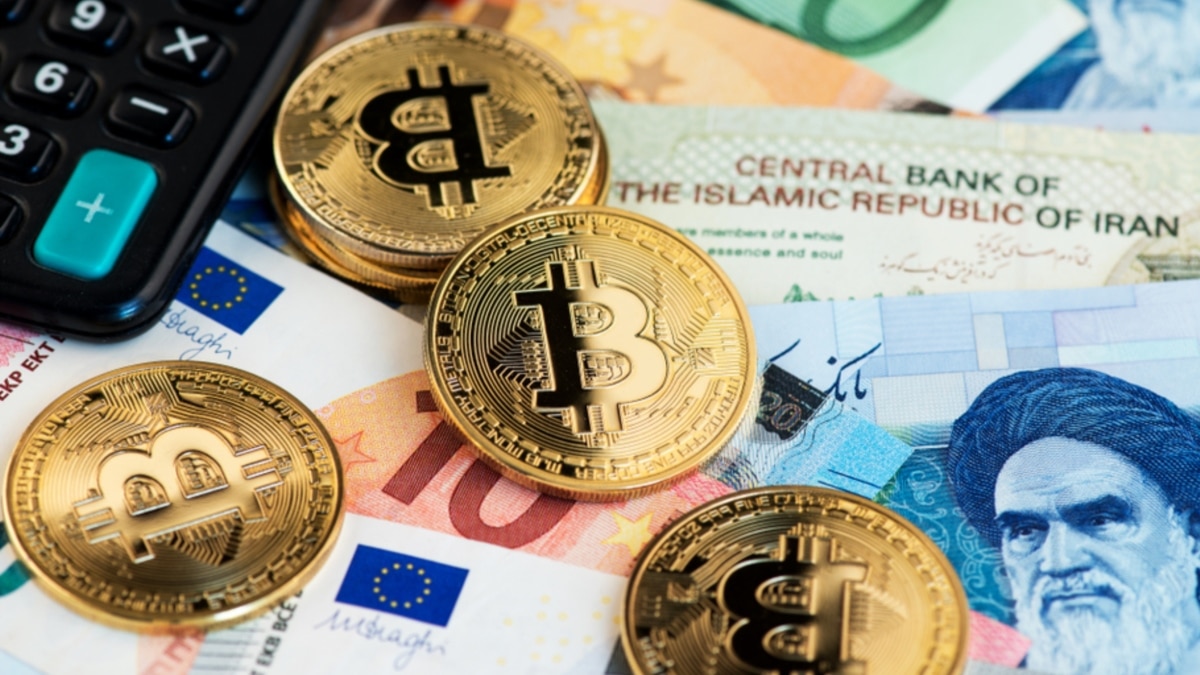
Iran Approves Cryptocurrency Regulations, Raising Fears Of Skirting Sanctions – Radio Free Europe / Radio Liberty

The U.S. ambassador to Bosnia-Herzegovina says Washington’s commitment to that Balkan state is “enduring” and it is committed along with its European allies to Bosnia’s “territorial integrity, sovereignty and security, and multiethnic character.”

In a recent interview with RFE/RL’s Balkan Service, Ambassador Michael Murphy accused Russia of seeking instability in the region but said a recent reinforcement of EU peacekeepers amid that challenge was indicative of transatlantic resolve.

“I think you did see from the United States and the Europeans a response, and it should signal that we are not going to leave [Bosnia-Herzegovina] to Russia,” Murphy said. “That is not going to be the outcome here.”

Earlier this month, Germany deployed about 30 of its troops to rejoin Europe’s EUFOR peacekeeping mission to ensure civilian order and compliance with a 26-year-old peace deal that organizes the country along ethnic lines, with a high representative for the international community who holds sweeping powers.

The international response to Russia’s war in Ukraine has tested the governments of aspiring EU members like Bosnia and Serbia, and their willingness to join Western sanctions and other measures to punish Russian aggression as well as to speed up reforms aimed at compatibility with Western institutions.

Tensions have meanwhile increased in the Balkans amid a potentially violent standoff over mutual recognition of documents between Serbia and its former province Kosovo, a culture-and-language spat between Bulgaria and North Macedonia, and public support from Moscow and EU member Hungary for ethnic Serb grievances around the region.

But Bosnia still routinely faces many of the same questions that dogged it in the early years after the Dayton Agreement ended three years of bloody fighting among Bosniaks, Serbs, and Croats in 1995.

“It’s not a secret, it’s readily apparent, that Bosnia-Herzegovina is not moving in the right direction and it hasn’t been for some time,” Murphy said.

He cited “terrible rhetoric” from political leaders in postwar Bosnia, “threats of secession, threats to reorganize the territory of the country, or just plain warmongering” but said Washington remains committed to Bosnian statehood.

“We want to ensure that we protect this country’s sovereignty, territorial integrity, and multiethnic character, and we’re prepared to use the tools at our disposal to defend this country’s territorial integrity, sovereignty, and multi-ethnic character,” Murphy said. “That includes sanctions where appropriate.”

Around half of Bosnia’s 4 million people are Bosniak, and centralized authorities are facing increasing pressure from secessionists in its majority Serb entity known as Republika Srpska and from ethnic Croats unhappy with perceived electoral inequalities.

Murphy suggested domestic politicians have “ignored” many of Bosnia’s problems, including withholding funding for elections under threat of boycott but also things like inflation, approximating EU laws, or preparing for possible energy shortages.

“Part of the good news story…is that the commitment of the United States [to Bosnia] is enduring,” Murphy said.

Echoing previous statements by Secretary of State Antony Blinken, he added: “We are not leaving, we’re not going to go away. We’re going to sustain our international presence here and our international military presence. And I think that’s very important when making an assessment about the security situation here.”

Murphy also expressed support for the current high representative, German Christian Schmidt, and his use of the so-called Bonn mandate to ensure smooth functioning of key civilian institutions, including to clear a path to planned Bosnian general elections in October.

Schmidt has hinted at his willingness to use that mandate to impose electoral reforms ahead of the voting if Bosnia’s ethnically based leaders prove unable or unwilling to do it themselves.

Murphy criticized powerful domestic politicians’ “all-or-nothing approach” when he said they should be achieving through compromise in the ex-Yugoslav republic.

He placed the blame “squarely, squarely on the shoulders” of unnamed political leaders who have put “their own narrow ethno-nationalist and corrupt interests above” the needs of ordinary Bosnians.

“Politicians [in Bosnia] have taken an all-or-nothing approach when engaging on these issue sets,” Murphy said. “They have concluded that compromise is a dirty word or a sign of weakness as opposed to success. And of course the exact opposite is the truth; in a democracy, compromise is how things get done.”

He acknowledged that some of Bosnia’s leaders “are on blacklists” and are running for office when in Washington’s view “they shouldn’t be.”

“But the voters of Bosnia have an opportunity to pass judgment on their performance this October,” he said.

In January, the United States imposed sanctions on secessionist Bosnian Serb leader Milorad Dodik for alleged “destabilizing and corrupt activity.”

Dodik has established parallel institutions in Republika Srpska and held high-profile meetings with Russian President Vladimir Putin and Russian Foreign Minister Sergei Lavrov since the war in Ukraine began, sparking massive international sanctions and other measures to punish Moscow.

There have been reports of intensified correspondence and consultation recently between NATO and Bosnian officials including Foreign Minister Bisera Turkovic and Defense Minister Sifet Podzic.

NATO Secretary-General Jens Stoltenberg recently cited a perceived threat to European security from Russia and said, “NATO is developing a set of measures especially tailored for Bosnia and Herzegovina.”

Bosnia became a NATO partner in 2006, but many ethnic Serbs regard the alliance with suspicion since its bombing campaign targeted Serb-led rump Yugoslav forces during the Kosovo War in 1999.

Dodik, who is the Serb member of Bosnia’s tripartite presidency, responded by saying Bosnia had sought no special measures from the Western alliance and that “NATO has no role in [Bosnia-Herzegovina] and is not the guardian of its territorial integrity and sovereignty.”

The Russian Embassy in Bosnia complained that the United States and Britain were “preparing the ground for the creeping NATOization of Bosnia.”

Murphy accused Moscow of acting “against the goals” of Bosnia’s citizenry and of issuing “irresponsible” statements about Bosnia.

Murphy suggested Moscow “doesn’t want to see stability, security, peace, and prosperity, [or] a prosperous Bosnia-Herzegovina.”

“Russia doesn’t have a say in the decisions that Bosnia-Herzegovina makes about its treaty relationships, whether that’s joining the European Union or joining NATO — those decisions are for a sovereign [Bosnia-Herzegovina] to make.” Murphy said.


from Cryptocurrency – My Blog https://ift.tt/GITFRHC
via IFTTT
https://gdb.rferl.org/4EFFECBC-8FBA-42B1-BAD9-170CA973B90E_cx0_cy15_cw91_w1200_r1.jpg
https://stockinvesthub.blogspot.com/2022/08/iran-approves-cryptocurrency.html

Stock futures rise slightly after second-straight negative session – CNBC

Stock futures ticked higher on Monday evening as Wall Street sought stability after another down day for stocks.

Futures for the S&P 500 inched upward by 0.1%, while Nasdaq 100 futures also added 0.1%. Futures for the Dow Jones Industrial Average gained 43 points, or 0.1%.

The moves in futures followed a second-straight decline for the major averages. The Dow lost 184 points, or 0.57%. The S&P 500 fell 0.67% and the Nasdaq Composite sank 1.02%.

The market has given back some of its summer gains after recent comments by Federal Reserve officials made clear that the central bank aims to continue its rate hikes, even if they cause economic pain.

“Investors are coming to terms with the idea that the Fed is serious about curbing inflation, even as recent data suggests inflation is starting to decline,” said Rod von Lipsey, managing director at UBS Private Wealth Management.

“We believe the market’s summer rally was ephemeral and continue to recommend that investors remain selective and focus on defensive stock sectors like health care and dividend-paying stocks,” von Lipsey added.

On Tuesday, investors will get several updates on the state of the economy, including the FHFA home price index for June, the Conference Board’s consumer confidence survey for August, and the Bureau of Labor Statistics’ job openings release for July.

Techyrack Website stock market day trading and youtube monetization and adsense Approval

Adsense Arbitrage website traffic Get Adsense Approval Google Adsense Earnings Traffic Arbitrage YouTube Monetization YouTube Monetization, Watchtime and Subscribers Ready Monetized Autoblog


from Stock Market News – My Blog https://ift.tt/WRktE0L
via IFTTT
https://image.cnbcfm.com/api/v1/image/107110721-1661789175637-nyse7.jpg?v=1661789212&w=1920&h=1080
https://stockinvesthub.blogspot.com/2022/08/stock-futures-rise-slightly-after.html

Bitcoin reclaims $20,000, FTX CEO denies bid for Huobi, and why NFT trading crashed – CNBC

Share

CNBC Crypto World features the latest news and daily trading updates from the digital currency markets and provides viewers with a look at what’s ahead with high-profile interviews, explainers, and unique stories from the ever-changing crypto industry. On today’s show, Anthony Georgiades, co-founder of Pastel Network, discusses the state of the NFT market after OpenSea trading volume plummets.

08:55

5 hours ago


from Bitcoin – My Blog https://ift.tt/1MFNjBb
via IFTTT
https://image.cnbcfm.com/api/v1/image/107110851-082922_CW_thumb.jpg?v=1661798548&w=1920&h=1080
https://stockinvesthub.blogspot.com/2022/08/bitcoin-reclaims-20000-ftx-ceo-denies.html

Mt. Gox creditor refutes reports on dumping 150,000 bitcoin – FinanceFeeds

Mt. Gox creditors will get their BTC and BCH repayment in tranches, steadily being distributed out over several months.

Eric Wall, a Mt. Gox creditor, has dismissed the rumors that all of the roughly 150,000 BTC sent to creditors would soon be offloaded into an already stressed bear market. He also confirmed that no payouts in crypto would occur in the next three weeks.

In the tweet, Eric clarified that creditors have yet to register their wallet addresses or submit banking details where their assets will be sent to, which would be the first step in getting the repayment plan going. As of now, no official date has been confirmed for the commencement of repayment, he added.

Almost a decade after an attack forced the platform to shut down,  Mt. Gox creditors were given the option to choose between bitcoin, cash or Bitcoin Cash to receive repayment. The process could make the frozen crypto assets liquid again, depending on the entitled users’ choices.

Those who chose to receive their repayment in bitcoin are reportedly posing a new selling threat to an already battered market. Even those who opt to get paid in fiat money are risking pressuring the market further as the trustee would supposedly liquidate an equivalent amount of bitcoin to pay out those interested in receiving cash.

Back in November, creditors of the defunct crypto exchange have overwhelmingly approved trustee’s compensation plan, a few weeks after a Tokyo court said there were no grounds for disapproving it.

“Following discussions with the Court and in accordance with the Rehabilitation Plan, the Rehabilitation Trustee plans to set the Assignment, etc. Restriction Reference Period from approximately the end of August this year until all or part of the repayments made as initial repayments is completed for safe and secure Repayments,” the court papaers read.

Mt. Gox went offline in 2014 in the single biggest setback in the history of Bitcoin after 850,000 bitcoins were stolen in a hacking attack. Under suspicious circumstances, the Japanese exchange claimed it had lost track of about 750,000 bitcoins belonging to customers and another 100,000 of its own, but later said it had found 200,000 bitcoins.

Those assets were supposed to be distributed to shareholders as ‎part of the liquidation. This is because the value of creditors’ claims is calculated in ‎the exchange rate between Bitcoin and the Japanese yen on the bankruptcy date in April 2014, instead of current rates.‎

However, the rehabilitation ruling is not in the financial interest of the shareholders. Mt.Gox has two ‎shareholders, Tibanne and Jed McCaleb. The Tokyo-based exchange is 88 percent owned by Tibanne, ‎of which Karpelès is the sole owner. The remaining 12 percent are held by Mt. Gox’s original ‎creator Jed McCaleb, a San Francisco-based programmer who currently works with ‎Stellar.‎


from Bitcoin – My Blog https://ift.tt/DC2aMbL
via IFTTT
https://financefeeds.com/wp-content/uploads/2022/08/Gox-300x189.jpg
https://stockinvesthub.blogspot.com/2022/08/mt-gox-creditor-refutes-reports-on.html

Surfing Bitcoin Maximalism – Bitcoin Magazine

This is a promoted article.

Surfin’ Bitcoin Conference, Casino Barrière Biarritz, France.

Josselin Tonnellier

Josselin Tonnellier organized the first Surfin’ Bitcoin Conference to educate people about Bitcoin and his French startup StackinSat, through which Europeans can accumulate Bitcoin via dollar cost averaging.

“Bitcoin is quite niche in France. We have a lot of blockchain and shitcoining,” Tonnellier remarked.

There aren’t many Bitcoin-only businesses in France. It’s remarkable that a team of about five people was able to coordinate and fund a conference of Surfin’ Bitcoin’s size, with just ten sponsors, notably among them Bpifrance, an investment bank for entrepreneurs.

According to Tonnellier, more than half of this year’s conference attendees were professional Bitcoiners. Nearly 25% were Bitcoin enthusiasts and OGs, and about 25% of them were general crypto enthusiasts.

Tonnellier originally brought Surfin’ Bitcoin to the South of France to decentralize the event away from Paris. Over the past few years, Surfin’ Bitcoin has grown from a few hundred attendees to about 2,000.

There were just over one hundred speakers at the conference. About 35% of them came from abroad, mostly European countries. For the first time the event included English content, with around 45 scheduled English speakers, and around 50 who spoke in French.

The first day of the conference was free, drawing in early conference attendees and tourists from the beach, some of whom experienced their first touch-point with Bitcoin, together viewing the French documentary Le Mystère Satoshi, by Remi Forte.

The conference hosted several debates—for example, Austrian economics vs Keynesian economics and crypto venture capitalists vs Bitcoin venture capitalists—in an attempt to stir up controversy, but also to win over crypto curious attendees with the Bitcoin maximalist point of view.

The main stage French presentations were packed throughout the conference, and what many of the English panels and workshops lacked in attendance they gained in interactivity between the audience and the speakers.

One Norwegian speaker even opted to come into the audience to do impromptu small group discussion of how best to defend Bitcoin mining from the often disingenuous environmental, social and governance (ESG) arguments against it.

The strength of Bitcoiners is that they are motivated whatever the situation, and that’s a strength altcoiners don’t have, Tonnellier noted.

“If the price is going up, I’m happy. If the price is going down, I’m happy because I accumulate more Bitcoin on the cheap. My clients understand that at StackingSat,” he said.

Tonnellier mentioned the recent failures of LUNA and Celsius, commenting that “we’re very sad by all the people that were wrecked by it, but it’s a way to clean the ecosystem of the actors who are not doing business in a proper way.”

He continued, “All the lending and defi stuff is quite dangerous, and can collapse very easily.”

Meanwhile, Bitcoin is thriving. “Bitcoin has faced many adversities throughout its life, and each time it comes out stronger,” he said.

The media in France hasn’t been too positive about Bitcoin, and Tonnellier noted the regulatory hurdles of launching both StackingSat and the conference. He hoped the conference itself will provide a positive Bitcoin touchpoint for the local Basque community.

The main downside to the Surfin’ Bitcoin conference was also its greatest virtue, the location.

The casino is beautiful. Light floods in from the two-story windows overlooking an expansive, sunny promenade, La Grande Plage. The busy beach is buffered by cliffs, swarms of swimmers in the rolling Atlantic and pods of surfers in the morning and late afternoon.

The allure of Basque country is so strong that many foreign attendees remarked on how hard it was to sit through full days worth of Bitcoin programming. 

To the Southwest, attendees could see the mountains and lights of Spain. To the Northeast, the lighthouse on the cliffs and the luxurious Hôtel du Palais, a former imperial vacation villa built for Napoleon III.

Up and down the coast as far as one can see, an eclectic mix of architecture winds through the 12th century whaling port, with its endless roughcast villas, the gray stone of Bidache, the red stone of the Rhune, lining Biarritz’s alleys, bridges and staircases climbing the hills.

When walking between stages, down the exhibition hall, or taking lunch on the expansive casino roof, dotted with French conference attendees smoking cigarettes and chatting, you could see hundreds of people lying in the sun, up and down the coast, dozens tumbling in the waves.

Tonnellier’s goal was to educate people on Bitcoin in a relaxed environment by the beach, rather than host a “bowtie conference in Paris.”

Indeed, on the rooftop of Casino Barrière Biarritz, just a stone’s throw from the beach, over 1,000 Bitcoiners gathered at sunset, casually eating, drinking and networking.

Some danced as the DJ played on the closing night of the conference, most clustered in groups, chattering about Bitcoin and legacy finance until 4:00 a.m., when many then returned to their beachside hotels, or then parted to go clubbing together.

There seemed to be little small talk among enthusiastic Bitcoiners in Biarritz, many of whom have aligned philosophies, principles and lucid hyperbitcoinized visions for the world’s financial future.

Pierre Rochard

Pierre Rochard, VP of research at Riot Blockchain, moved away from France at a young age. He opted to speak in English at this year’s Surfing’ Bitcoin Conference.

Pierre attended his first Bitcoin conference in New York in 2013, where he met Suhas Daftuar. The connection later led to a Bitcoin job at Chaincode Labs.

At the time, during the 2012–2013 Cypriot financial crisis, Pierre recalls the sentiment among Bitcoiners on Reddit was that the bank run in Cyprus would trigger mass Bitcoin adoption.

The belief among Bitcoiners draws parallels to this day, where the network’s adoption is often assumed to be inversely proportional to the unethical behavior of central banks, and global state theft via inflation and taxes.

“You can’t really just foist Bitcoin onto the general public, and expect them to be interested,” Pierre remarked.

He went on to explain that the general public views Bitcoin as just a brand among crypto brands, in part due to the misleading advertising of the large crypto exchanges.

“Bitcoin’s node software is strictly superior to Dogecoin’s node software, for example, and the brand is just very far downstream from that fact,” he added.

Pierre recalls losing interest in Bitcoin during the 2014-2015 bear market. “I certainly didn’t rage quit or lose confidence in Bitcoin. I started focusing on building my own quadcopter drone instead.”

In 2015, when the price of Bitcoin was around $300 dollars, Pierre recalled a tongue-in-cheek conversation with Michael Goldstein. “We should just keep the Nakamoto Institute website up, even if Bitcoin doesn’t become a thing, as a historical artifact.”

Today, Pierre’s wife Morgen Rochard runs a financial planning practice, where she has succeeded in helping 90% of her clients get exposure to Bitcoin. “Most of them also hold their own private keys,” she said.

Pierre sees the perfect audience for Bitcoin conferences as the curious-to-casual Bitcoiners who are looking to further educate themselves.

In 2018 Pierre attended Consensus, where, at a satellite event put on by The Block, he was invited to speak on Bitcoin maximalism. At that event he met the team of his current employer, Riot Blockchain.

Pierre considers the challenge of conferences to be striking a content balance between pop-culture Bitcoin and open-source Bitcoin audiences.

An engaging balance was struck in Biarritz, with entire stages dedicated to expert-level Bitcoin content and technical workshops, and several controversial debates between professional Bitcoiners and altcoiners.

Prince Philip Karageorgevitch of Serbia

Prince Philip Karageorgevitch first encountered Bitcoin in the run up to $100 dollars in 2013. He first bought bitcoin in 2017 and held it through the bear market, buying regularly.

The prince began to learn more about Bitcoin in response to global government overreach during the covid pandemic. “That’s when I realized there’s something not right with this world.”

“I’m a Bitcoin maxi,” he stated. “Eventually I will probably be working in Bitcoin.”

At the conference Prince Philip delivered a keynote on why he is bullish on Bitcoin and also moderated a panel on the future perspective of Bitcoin and crypto markets.

He believes the benefit of Bitcoin conferences is that the crypto curious might educate themselves and become maximalists.

“Altcoiners also know there’s something wrong with the world, but they don’t know what it is really. They understand that money corrupts, but they don’t understand their money is corrupt,” he said.

Prince Philip explained how Bitcoin is the only ethical alternative to the fiat system, a maximalist position with which many crypto enthusiasts don’t agree.

“People aren’t taught about what money is really. They don’t understand how the wars of history are funded,” he said.

Indeed, many of those who neglect Bitcoin as a form of self-sovereign savings have left the market, and it remains to be seen how far below $20,000 bitcoin speculators, whales and noobs will send the price.

The common strategy among the French conference goers was to just buy and hodl Bitcoin, though many also spoke of small allocation, speculative derivative plays. Despite the bear market, there is no shortage of Bitcoin conferences in the coming months.

“This bear market is great because it sorts out those who really care about Bitcoin from those who are just here for fiat gains.”

Prince Philip commented that the crypto sponsorships and speaker slots that often accompany Bitcoin conferences are a good opportunity to educate people on Bitcoin maximalism.

“Right now nation states are considering Bitcoin,” he argued. “They have to because it’s a threat. If it’s a threat they have to have an insurance hedge against Bitcoin. The only insurance hedge against Bitcoin is to buy Bitcoin.”

The IMF and World Bank won’t admit it, but tourism increases in countries and cities that are friendly to Bitcoin. The greatest example of this is El Salvador, where tourism increased 82.8% in the first half of 2022, in part due to the influx of thousands of visiting Bitcoiners.

This is evident at Biarritz as well, where over the course of three days, thousands of Bitcoiners descended on the sunny Basque city, packing its hotels, beaches, clubs, tapas bars and restaurants.

Prince Philip remarked that in Serbia, however, the populace mistrusts governments, and is skeptical of outside powers, viewing Bitcoin as too good to be true. The country has gone through multiple wars in the past 90 years, experiencing the third highest hyperinflation in the world during the 1990’s.

Prince Philip concluded that with education, Serbians will understand how Bitcoin adoption empowers them to take control of their own money.

Charles Guillemet

Charles Guillemet, CTO at French cryptocurrency hardware wallet company Ledger, has a background in cryptography and security. He joined the firm in 2017.

According to Guillemet, Ledger currently has over 800 employees and is the largest crypto hardware wallet provider on the planet.

When I asked Guillemet whether he was a Bitcoiner, he hesitated. “Definitely I think Bitcoin is king. It has a unique value proposition in the ecosystem.”

Guillemet believes Ethereum also has a unique value proposition, “which can be respected as well.”

“With Ethereum there are plenty of technical challenges, and maybe a more efficient blockchain could take its place,” he conceded.

We agreed that Guillemet is a Bitcoiner, but not a Bitcoin maximalist.

I asked Guillemet whether he preferred Bitcoin or crypto conferences. He replied, “At Ledger we don’t have a religion. We are providing security tools for users to get onboarded. We have different trends.”

“What’s important for us is the seriousness of the project,” Guillemet said. I asked him how he qualified that. “It’s difficult. Does the project pass the test of time? Scammy projects don’t pass the test of time often. An ecosystem of developers is a good sign.”

Minutes later, Guillemet said that Ledger is looking to further platformize their product, so that “every single chain can be implemented within the device.”

In terms of Bitcoin developments at Ledger, Guillemet said that they will soon release the ability to run your own full node. Ledger is also working to integrate Tor to protect users’ privacy and release a Bitcoin credit card, to which users will be able to send Bitcoin as collateral for fiat credit.

Guillemet commented that conferences are good for exchanging ideas. “Bitcoin is a crossing point for technology, economics, and geopolitics. If you don’t get that, you don’t understand Bitcoin.

“It’s a paradigm shift. It’s not easy to understand Bitcoin when you come from the fiat monetary system,” he added.

In the event of a hardware wallet know-your-customer (KYC) regulatory crackdown in Europe, Guillemet commented that Ledger would have no choice but to comply. Nonetheless, he wants to ensure the current Ledger users are self sovereign.

He concluded, “For me what is apparent in Bitcoin and cryptocurrency is that if you don’t self custody, there’s no point.”

John Carvalho

John Carvalho is the founder and CEO of Synonym, which develops an ecosystem of applications and protocols for a future hyperbitcoinized world.

Carvalho is a self proclaimed toxic Bitcoin maximalist, meaning he doesn’t believe blockchains outside of Bitcoin are necessary or ethical forms of money. He is also skeptical of attempts to expand the idea of the Lightning Network outside of any non-payment use cases.

When I asked Carvalho how his business accounted for a multichain future, his response was, “By ignoring it.”

“The only people who care about a multichain world are people who are trying to sell you their chain,” he said.

Carvalho first bought Bitcoin in 2012 and attended his first conference in early 2013. “I was basically a full time Bitcoiner two months after getting some.” Over the next few months he plans to attend four Bitcoin conferences.

To be sure, Carvalho is an opinionated, but rational Bitcoiner. In reference to the Bitcoin Conference’s invitation to have him debate Eric Wall in Amsterdam, he commented, “Bitcoin debates should seek truth, not drama.”

“You can’t refute FUD [fear, uncertainty, and doubt]. You can try to rationalize with it, but they will keep changing the angle.”

Imagining his debate with Wall, Carvalho riffed, “You cannot innovate on Bitcoin in a way that compromises censorship resistance. Every shitcoin does that.”

“If the prerequisite for me taking you seriously is I have to accept a censorable blockchain, then the argument is over for me,” he added.

Carvalho opined that Wall, who is not a Bitcoin Maximalist, is coming to Bitcoin Amsterdam to sow seeds of dissent. “I would like to see Bitcoin Magazine not focus on clicks and drama, like every other media outlet.”

Carvalho’s opinion, shared by many maximalists, is that if a business or individual offers their own product on a blockchain that is not Bitcoin, they should not be able to sponsor or get on stage at a Bitcoin conference. “These are business decisions, not Bitcoin decisions.”

The role of Bitcoin conferences, he said, is education and news.

In terms of the near-future outlook for Bitcoin, Carvalho would like “to see something cause Bitcoin to stop correlating with the U.S. stock market.”

“It’s really frustrating me,” he said. “A lot of the ownership of Bitcoin is still speculators and traders.”

Carvalho concluded, “As a community and as a movement, we need to be promoting the idea of using Bitcoin as long-term savings, while also spending and accepting Bitcoin as a payment method.”


from Bitcoin – My Blog https://ift.tt/DytxMTX
via IFTTT
https://bitcoinmagazine.com/.image/t_share/MTkxOTU5MzMxNDA5NzY2MDUx/untitled-photo-2.png
https://stockinvesthub.blogspot.com/2022/08/surfing-bitcoin-maximalism-bitcoin.html

‘There is no such thing as a such factor as a free lunch.’ 4 classes for crypto traders from the FTX collapse – CNBC

Bahamas-based crypto alternate FTX filed for chapter within the U.S. on Nov. 11, 2022, searching for courtroom safety because it appears ...