Sunday, 20 November 2022

‘There is no such thing as a such factor as a free lunch.’ 4 classes for crypto traders from the FTX collapse – CNBC

Bahamas-based crypto alternate FTX filed for chapter within the U.S. on Nov. 11, 2022, searching for courtroom safety because it appears for a method to return cash to customers.

Nurphoto | Nurphoto | Getty Pictures

After a tough 12 months for digital belongings, many traders had been blindsided by the latest collapse of cryptocurrency exchange FTX, as prospects look ahead to solutions about an estimated $1 billion to $2 billion of missing funds.

Whereas the way forward for the corporate — and investigations into the vanishing belongings — are in limbo as FTX enters bankruptcy protection, specialists say there are key classes for crypto traders.

“The FTX collapse supplies harsh reminders that ‘there isn’t a such factor as a free lunch’ when attempting to make a fast buck in a nonetheless pretty new, unregulated monetary business,” mentioned licensed monetary planner Jon Ulin, CEO of Ulin & Co. Wealth Administration in Boca Raton, Florida.

Extra from Private Finance:
It’s been a rough year for crypto but you still may have a tax bill
Credit card balances jump 15% as Americans fall deeper in debt
Biden administration warns of rise in student loan defaults

You must make investments “what you’re prepared to lose 100%, like in Vegas,” and “discretion and skepticism” must be exercised when weighing belongings and associated merchandise pitched by “pro-athletes, celebrities and media personalities,” Ulin mentioned.

Listed below are 4 different classes for traders from FTX’s downfall.

1. Know the dangers of the place you are holding cryptocurrency

Kevin Lum, a CFP and founding father of Foundry Monetary in Los Angeles, works with youthful traders and mentioned about 50% of his shoppers maintain crypto in some kind. 

Whereas he would not essentially suppose shoppers want to scale back their publicity, he mentioned they should understand where digital currency is held and the potential dangers of retaining belongings there.  

“I feel the collapse of FTX will find yourself being good for conventional finance firms like Constancy who’re getting into the crypto house, as a result of they arrive with a sure degree of belief,” Lum mentioned.

Earlier this month, Constancy Investments introduced plans to launch a commission-free crypto product, permitting traders to purchase and promote bitcoin and ether.

The FTX collapse has additionally renewed interest in cold storage, or taking digital foreign money offline, making it much less inclined to hacks. Nevertheless, the transfer makes belongings much less liquid and more durable to commerce shortly.

2. Diversification is ‘all the time essential’

Whether or not you are investing in shares, cryptocurrency or different belongings, specialists say a big proportion of a single holding will be dangerous.

“Diversification is all the time essential,” mentioned George Gagliardi, a CFP and founding father of Coromandel Wealth Administration in Lexington, Massachusetts.  

“For people who had a really excessive allocation to cryptocurrencies, whether or not in FTX or not, the crypto worth crashes this 12 months had been a painful lesson within the significance of diversifying one’s funding lessons,” he mentioned.

The [FTX] collapse must be a lesson that any particular person firm — be it a crypto alternate or extra conventional enterprise — can go bankrupt in occasions of misery.

Kevin Brady

Vice chairman of Wealthspire Advisors

Since topping an all-time high of $68,000 in November 2021, the worth of bitcoin has plummeted by greater than three-quarters, dropping beneath $17,000 as of Nov. 17. 

“The [FTX] collapse must be a lesson that any particular person firm — be it a crypto alternate or extra conventional enterprise — can go bankrupt in occasions of misery,” mentioned Kevin Brady, a CFP and vice chairman of Wealthspire Advisors in New York.

When weighing portfolio allocations, he mentioned, 5% of a single asset “begins to be materials” and 10% is “very concentrated.” After all, there could also be mitigating circumstances for some traders. 

“Even when a monetary asset is speculative in nature, it could nonetheless play a job in a well-diversified portfolio, albeit in small quantities,” mentioned Ulin of Ulin & Co.

Loading chart…

3. Count on extra crypto regulation

There’s been an ongoing debate about how cryptocurrency must be labeled and controlled and it has intensified amid the FTX fallout.

Sens. Cynthia Lummis, R-Wyo., and Kirsten Gillibrand, D-N.Y., in June introduced a bill to create a regulatory construction for digital foreign money, defining nearly all of belongings as commodities, resembling gold or oil, that are overseen by the Commodity Futures Buying and selling Fee.  

Specialists say the FTX meltdown might speed up these discussions — and pace up the timeline for future tips. “I feel we’ll see rules,” mentioned Ivory Johnson, a CFP and founding father of Delancey Wealth Administration in Washington. “And I feel these dangerous enterprise fashions will go away.”
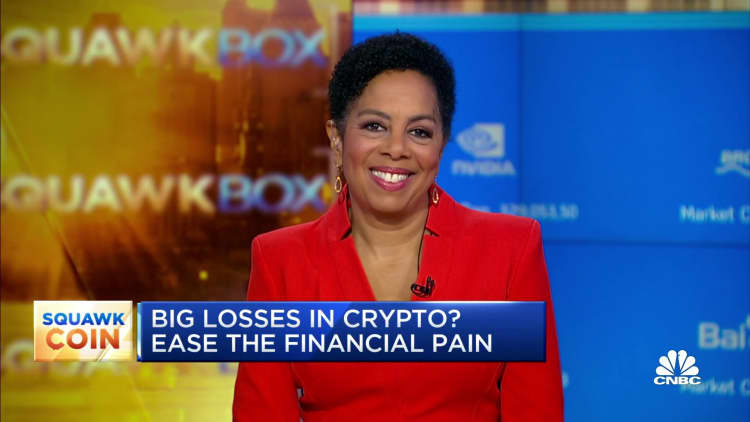
Facing big losses in crypto? Here's how to ease your financial pain

Home Monetary Companies Committee Chairwoman Maxine Waters, D-Calif., and the rating Republican, Rep. Patrick McHenry, of North Carolina, on Wednesday introduced plans for a bipartisan hearing in December to research FTX’s collapse. 

Whereas Congress will finally resolve how authorities companies might regulate cryptocurrency, Securities and Trade Fee Chair Gary Gensler has been pushing for tighter guidelines. “Traders want higher safety on this house,” he told CNBC’s “Squawk Field” on Nov. 10.

4. Again up your crypto transaction information

No matter the place you are holding digital foreign money, specialists recommend downloading your transaction historical past periodically.

Gathering reporting paperwork is without doubt one of the most tough components of crypto taxes, mentioned Andrew Gordon, tax legal professional, CPA and president of Gordon Regulation Group. And if an alternate closes down, you will nonetheless want information to file your return, he mentioned.

“Two weeks in the past, only a few individuals suspected FTX can be dealing with this,” Gordon mentioned.

Plus, you will have a greater really feel on your income and losses by monitoring all year long, he mentioned, making it simpler to trim your bill with methods resembling tax-loss harvesting. “It can put you in a a lot better place when tax time comes,” he mentioned.


from Cryptocurrency – My Blog https://ift.tt/WR39BQM
via IFTTT
https://image.cnbcfm.com/api/v1/image/107152537-16686002951668600292-26614358510-1080pnbcnews.jpg?v=1668604791&w=750&h=422&vtcrop=y
https://stockinvesthub.blogspot.com/2022/11/there-is-no-such-thing-as-such-factor.html

Data Suggests Bitcoin Holders Remain Steadfast – Bitcoin Magazine

This is an opinion editorial by Shane Neagle, the editor-in-chief of “The Tokenist.”

Macroeconomic headwinds are continuously adding to a bearish narrative across all markets, including bitcoin.

As of October 2022, bitcoin is down more than 60% since the start of the year, yet bitcoin’s trading volume remains fairly consistent since July 2022. Does that mean the majority of holders are giving up on the prospect of bitcoin and opting to sell?

This is a complex topic to dive into, but there’s one indicator that can help us paint a picture of what’s taking place behind the noise: coin days destroyed (CDD).

What Are Coin Days Destroyed?

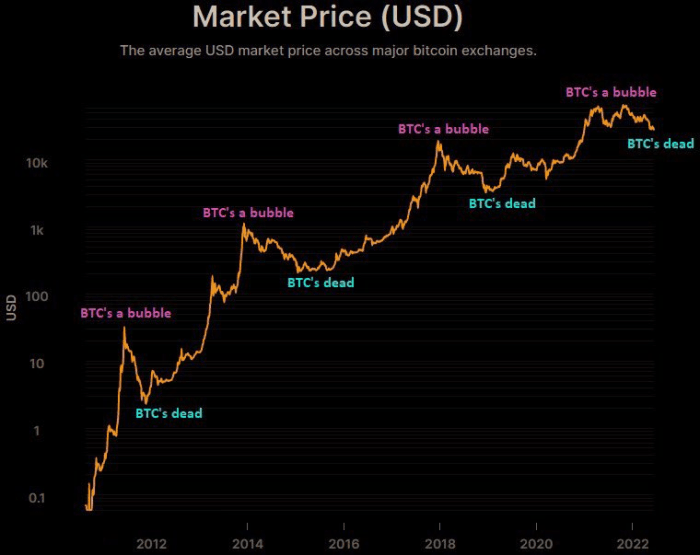
Throughout the course of an asset’s trading history, there is a significant difference if the buying price was on the lower or higher end of the price spectrum. In the case of bitcoin, that spectrum is relatively short — just 13 years — but quite variable in terms of price (ranging from $0-$69,000). The original cryptocurrency has undergone four major bull and bear cycles, but when zooming out, has continuously trended upwards.

Looking at metrics that give more weight to bitcoin held for the long term, the conviction of holders is stronger than ever and only growing.

Image credit: Visualize Bitcoin

The implication of this long-term, upward trajectory is clear. Investors who were the earliest to buy bitcoin have the most to gain by selling, even in bear markets. Likewise, investors who took the opportunity to purchase bitcoin early and at a lower cost, had the opportunity to buy much more bitcoin for the same amount of fiat currency compared to prices later in bitcoin’s history.

In turn, bitcoin that were mined and purchased earlier have different value significance than newer bitcoin released into the circulating supply. If these “aged” bitcoin are held in the same wallet for an extended period of time, such on-chain activity would suggest a strong conviction held by the owner in terms of bitcoin’s long-term value proposition. Such activity sends a strong signal to the Bitcoin network.

In addition, a long-term holder of dormant bitcoin has an increased likelihood of experiencing multiple bear and bull market cycles, which further amplifies the significance of old bitcoin moving.

The metric of coin days destroyed measures this significance. According to Glassnode, “Coin days destroyed is a measure of economic activity which gives more weight to coins which haven’t been spent for a long time.” CDD is calculated by multiplying the number of coins in a given transaction by the number of days since they last moved from a wallet.

Bitcoin is often critiqued for its high levels of volatility. Yet there’s clear demand for bitcoin in long-term investments, even in traditional IRAs. CDD is a popular on-chain indicator used to measure the sentiment maintained by long-term holders — individuals who see value in the long-term prospects of bitcoin.

So, what does the current CDD level suggest?

Bitcoin’s CDD Has Been Quite Low

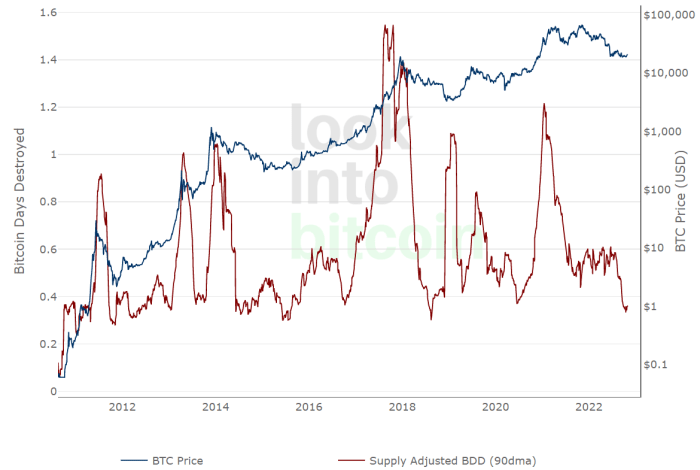
At 0.36, the 90-day moving average of bitcoin’s CDD in October 2022 hit one of the lowest values throughout its history. This particular range was only visited previously in 2018, 2015 and late 2011. As the supply-adjusted bitcoin days destroyed (BDD) chart below shows, the highest BDD upticks happened during bull run peaks, which is to be expected as long-term holders lock in their profits.

Looking at metrics that give more weight to bitcoin held for the long term, the conviction of holders is stronger than ever and only growing.

Image credit: LookIntoBitcoin.com

In other words, long-term Bitcoiners — in the context of the asset’s historical selling activity — are continuing to hold bitcoin in large numbers. This could be one of the reasons why bitcoin’s price activity has been relatively stable. Such holders could be acting as safeguards against selling pressure.

If we turn to bitcoin’s trading volume, do we see a similar pattern? 

Looking at metrics that give more weight to bitcoin held for the long term, the conviction of holders is stronger than ever and only growing.

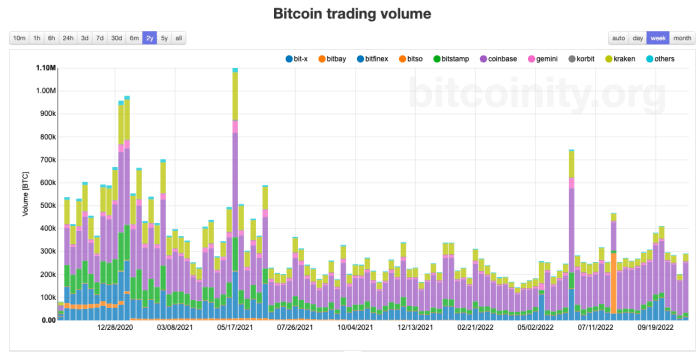
Image credit: bitcoinity.org

The above chart shows bitcoin’s trading volume from October 2020 to October 2022. What’s noted here is fairly steady and consistent trading volume from roughly July 2021 to October 2022. We do not see a drop, which resembles the activity from CDD.

The combination of data from these two indicators — a low CDD with steady and consistent trading volume — further suggests that most of the bitcoin traded was by short-term holders. In fact, bitcoin from 2010/2011, purchased at well under the $100 range, have moved the least.

Overall, according to Glassnode data, just over 60% of circulating BTC haven’t moved in over a year. This holding trend also contributed to bitcoin’s exceptionally low volatility. Comparatively, in 2018, a similar price volatility was followed by a 50% drop in a single month, from $6,408 in November to $3,193 in December.

Is it likely we will see a new bottom even with long-term Bitcoiners holding the line?

Additional Bitcoin Sell-Off Pressures

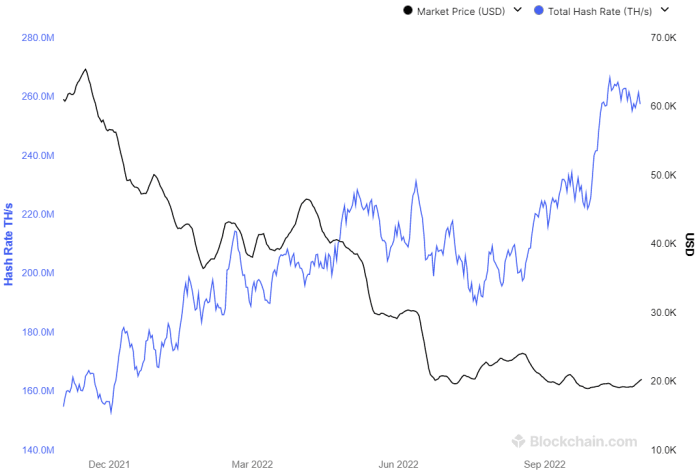
Presently, bitcoin’s price is inversely related to its record-high hash rate. This is not good news considering miners have to service their debts by selling mined bitcoin, even at their bottom price point in this bear cycle.

Looking at metrics that give more weight to bitcoin held for the long term, the conviction of holders is stronger than ever and only growing.

Image credit: blockchain.com

Already, one of the largest bitcoin mining companies, Core Scientific (CORZ) — with a share of hash rate around 5% of the network’s total — is exploring bankruptcy. In the meantime, CORZ stock collapsed by 98.32% year-to-date.

Argo Blockchain (ARBK) shares the same fate, having fallen by 91.56% and is unable to sell enough assets to cover the costs. According to an operational update from Argo in October 2022:

“Should Argo be unsuccessful in completing any further financing, Argo would become cash flow negative in the near term and would need to curtail or cease operations.”

Although these mining companies will likely end up lowering the Bitcoin hash difficulty, in a game of survival of the fittest this has the potential to cause another contagion spiral. This time around, vulnerability and market sell-offs could come from remaining centralized platforms that are lending dollars to bitcoin mining companies. Going back to the ongoing macroeconomic headwinds, how the market interprets the Federal Reserve’s next moves may end up raising the price of bitcoin just enough for miners to stay above water.

Because the Fed increases the cost of capital and borrowing, making the dollar stronger in the process, this typically makes investors leave risk-on assets, such as bitcoin. When investors forecast a recession, the dollar reigns even stronger, as investors dive into cash as a safe harbor.

By the same token, the Fed’s signaling against accelerated tightening — a pivot from its anticipated raise schedule — could provide market relief.

With that said, the so-called “Fed pivot” should not be understood as a return to lower interest rates, but as a deceleration to potentially hiking only 50 basis points in December (if incoming inflation data favors it). Nonetheless, in the current fearful market environment, that may be sufficient for a short-term rally, or at least, the avoidance of a new bitcoin bottom.

Despite the many factors pushing investors away from risk-on assets — the Fed battling 40-year-high inflation, a looming energy crisis in Europe, ongoing global supply chain issues and even Bitcoin’s mining difficulty — data from CDD and bitcoin trading volume provides us with an interesting observation. Long-term holders seem more confident than ever in the long-term value proposition that bitcoin provides. Such holders are currently selling bitcoin at one of the lowest rates we’ve seen in the history of the Bitcoin network.

This is a guest post by Shane Neagle. Opinions expressed are entirely their own and do not necessarily reflect those of BTC Inc or Bitcoin Magazine.


from Bitcoin – My Blog https://ift.tt/o7CkyJm
via IFTTT
https://bitcoinmagazine.com/.image/t_share/MTkzNzkzNTcyODkyMzIxMjY0/bitcoin-market-price-log.png
https://stockinvesthub.blogspot.com/2022/11/data-suggests-bitcoin-holders-remain.html

Saturday, 19 November 2022

Peter Schiff Says Bitcoin Still Has a Long Way to Fall — Values BTC at $10K – Markets and Prices Bitcoin News – Bitcoin News

Economist and gold bug Peter Schiff says bitcoin still has a long way to fall after the collapse of crypto exchange FTX. He also believes that $10K is the real price of bitcoin, warning that “The lion’s share of the selling has not even started yet.”

Schiff Predicts ‘Bitcoin Still Has a Long Way to Fall’

Gold bug and economist Peter Schiff has warned in a series of tweets about the price of bitcoin falling a long way from its current level.

He began by referencing the forecast he made in June that the need to sell bitcoin to pay bills will only get worse as the recession deepens and long-term BTC holders without paychecks are forced to sell. Noting that it did not take long for his prediction to come true, Schiff tweeted Wednesday:

The lion’s share of the selling has not even started yet. Bitcoin still has a long way to fall.

He added in a follow-up tweet: “I’ve been warning for years that all the people who made money in crypto will be sued by all the people who lost money in crypto. So lawyer up pumpers.”

Commenting on the collapsed crypto exchange FTX and former CEO Sam Bankman-Fried (SBF), Schiff wrote: “I never looked into SBF as I never even considered investing in FTX. But had I done ten minutes of due diligence the red flags would have been obvious.” He elaborated:

That many in crypto were so easily duped by an obvious conman calls into question their judgment on everything crypto.

Schiff Thinks $10K Is the Real Price of Bitcoin

Schiff also shared his thoughts on the recent performance of Grayscale’s bitcoin trust (GBTC) and its relation to the price of bitcoin. The bitcoin skeptic wrote Friday:

Based on GBTC’s 43% discount to NAV, bitcoin is already trading well below $10K. I think this is the real price of bitcoin, as when you sell GBTC you get paid real cash. But when you sell BTC you get paid tether. To get actual cash for bitcoin you must accept a huge discount.

“GBTC is trading at a 46% discount now. New record. Something is definitely going on. Bitcoin is in real trouble. Get out while you can!” the gold bug added. At the time of writing, BTC is trading at $16,727.

Many people on Twitter disagreed with Schiff. One user opined: “This is just embarrassing. Imagine trashing BTC since it was $100, and all these years later, you still have no idea about any aspect of it.” Another wrote: “I have never got tether when I sold bitcoin. Also, the discount is because there are hedge funds that can only buy GBTC and not BTC that are getting trashed and have to raise whatever liquidity they can.”

Market analyst Joe Consorti explained on Twitter Friday that GBTC has been dumped by institutions all year long and its parent company Digital Currency Group (DCG) has chosen to pick up the bag “to mitigate the impact of the institutional-level selling pressure and prop up the fund’s net asset value (NAV).” However, he noted, “Still, that intervention hasn’t stopped the discount to NAV of the fund widen out to -42.7%.”

On Friday, Grayscale Investments shared information on the safety and security associated with its products. The asset management firm insisted that its products’ digital assets are safe and secure.

Tags in this story
Peter Schiff, Peter Schiff $10K bitcoin, peter schiff bitcoin, Peter Schiff bitcoin price prediction, Peter Schiff btc, peter schiff crypto, peter schiff cryptocurrency, Peter Schiff FTX, Peter Schiff real bitcoin price, Peter Schiff Sam Bankman-Fried, Peter Schiff SBF

What do you think about the comments by Peter Schiff? Let us know in the comments section below.

Kevin Helms

A student of Austrian Economics, Kevin found Bitcoin in 2011 and has been an evangelist ever since. His interests lie in Bitcoin security, open-source systems, network effects and the intersection between economics and cryptography.


Image Credits: Shutterstock, Pixabay, Wiki Commons

Disclaimer: This article is for informational purposes only. It is not a direct offer or solicitation of an offer to buy or sell, or a recommendation or endorsement of any products, services, or companies. Bitcoin.com does not provide investment, tax, legal, or accounting advice. Neither the company nor the author is responsible, directly or indirectly, for any damage or loss caused or alleged to be caused by or in connection with the use of or reliance on any content, goods or services mentioned in this article.

Read disclaimer


from Bitcoin – My Blog https://ift.tt/38i0ug2
via IFTTT
https://static.news.bitcoin.com/wp-content/uploads/2022/11/schiff-bitcoin-10k.jpg
https://stockinvesthub.blogspot.com/2022/11/peter-schiff-says-bitcoin-still-has.html

Our Relationship To Money Helps Us Understand Bitcoin – Bitcoin Magazine

This is an opinion editorial by Mark Maraia, an entrepreneur, author of “Rainmaking Made Simple” and a Bitcoiner.

“What Is Your Relationship To Money?”

I’d argue that’s a more intimate question for many than “Are you happily married?”

I’m sure most readers have never thought deeply about their relationship to money. Those raised with a scarcity mindset will never have enough. This is usually learned from parents and family at a very young age. It is also reinforced by fiat. If you are losing 7.7% of your purchasing power every year, you are likely to foment a mindset of scarcity. Those raised with or those who cultivated an abundance mindset were programmed differently. Either way, your mindset around and about money is ultimately a choice; you can alter or rewrite the program. For some people, this is easy. For others, it’s nearly impossible. And there are people who have plenty of money, but still aren’t happy.

In our modern world, there are many who believe that money is essential to life. There are some who go overboard and idolize money. They worship making it and they worship the people who make lots of it. If you have or earn ample amounts of money, count your blessings. A man or woman who has few needs lives more freely and abundantly than the rest.

Most of us have a special — often invisible or unexamined — relationship to money. For some, it gives them their whole reason for being in this world, while for others it’s a means to an end. As we observe events like Prime Minister Justin Trudeau’s freezing of Canadian truckers’ bank accounts or Biden’s theft of Russian reserves, we start to realize some chilling realities about the nature of money. If you don’t have physical possession of the monetary asset, all you have is an IOU, and that IOU is very tenuous if the ruling authorities decide your words or actions don’t comport with their worldview. Usually, the IOU is from the bank or credit union where you have deposited “your” money. The only thing is: It’s not “your” money once it’s deposited into the bank.

Bitcoiners are fond of saying, “Not your keys, not your coins.” What many people who aren’t Bitcoiners don’t stop to consider is that the money in their bank account isn’t really theirs. Zoltan Pozsar, global head of short-term interest rate strategy at Credit Suisse, makes the case that we’ve entered a new era of Bretton Woods III, which involves inside money and outside money and claims that commodities will underlie international monetary affairs. Inside money is money which has a middleman, such as a bank. All the money that you hold is essentially an IOU. Outside money is money that is outside of the banking system. It cannot be taken from you through denying you access to an account, nor can they inflate it away.

Money you earn for the work you do is proof of work. If you’re fortunate, you earn more than you need for everyday living. In the paper money era, that meant you traded your precious time, labor and life energy for green paper strips and little metal disks. Today you trade your precious time, labor and life energy for pixels on a computer screen. When viewed through that lens, one begins to realize that money is just a symbol. If all we have is an IOU with a bank, all kinds of mischief is possible from governments and banks. This may include bailouts, bail-ins and outright theft. This is deeply troubling. Our reliance on state-issued currencies means our wealth can be confiscated with a keystroke or the stroke of a pen.

The question at the outset can be further broken down into two very important and personal questions:

What Is Your Relationship To The U.S. Dollar?

I grew up very fortunate. I lived in a home that always had food on the table, a roof over our heads and the privilege of not having to ever worry about money. A classic middle-class upbringing through high school. I went to a public school and a private college, where I paid for half my education and worked as a professional once I got out of school.

I was so fortunate to grow up never really thinking much about money. It was low on my list of priorities and remains that way to this day. I rarely worried about having enough and generally took money for granted. Yes, in the early days of my career, I lived paycheck-to-paycheck, but I had savings — modest though they were — and parents who were a financial backstop. A family banker of last resort, as it were.

That upbringing was both a blessing and a curse. Why a curse? Because I never gave money much thought. Aside from the unspoken values my parents modeled, I was never taught about money, our banking system or our financial system. Those of us living in the U.S. enjoy the additional privilege of having the world’s reserve currency in our pocket. That privilege is one most Americans take for granted.

Link to embedded tweet.

While the U.S. dollar today is still considered the world’s strongest currency, it is no longer a reliable store of value. Even the most privileged people begin to take notice after watching the Federal Reserve and our government put absurd amounts of money into circulation.

All Americans alive today grew up with the dollar as the world’s reserve currency. To most, that means nothing. Most of us can probably remember the first time someone handed us a $5 bill or some other denomination when we were young and we felt a rush and thought. “Wow, I’m rich!”

Do you have strong feelings of pride over the U.S. and its founding ideals? Could that influence how you see the dollar? Do you have feelings of shame over the forever wars we’ve fought since Vietnam? While it may seem irrelevant, those feelings will dramatically impact your relationship to the country’s currency.

Are you a money manager in a hedge fund? Are you a millennial? Are you a boomer? Are you a venture capitalist? Each will shape your relationship with the world’s most desirable fiat currency. Do you see your bank account or access to capital as a source of safety, a source of security or a source of power? Do you see having a bank account as a privilege? These are all symbols. The majority of people in the world are unbanked. As we’re learning in 2022, these symbols are losing their luster and are highly illusory.

Enter a new kid on the block that was quietly brought into existence on January 3, 2009.

What Is Your Relationship To Bitcoin?

A huge percentage of people in the Western world are dismissive of it. Like all new technology, we find it hard to trust something we don’t understand. Until we have no choice. Canadian truckers were not interested in bitcoin until they needed to be. I believe we have now entered a period in which the transgressions of the fiat system leave us with no choice but to learn more about bitcoin.

This is a guest post by Mark Maraia. Opinions expressed are entirely their own and do not necessarily reflect those of BTC Inc or Bitcoin Magazine.


from Bitcoin – My Blog https://ift.tt/JCi39Oy
via IFTTT
https://bitcoinmagazine.com/.image/t_share/MTkwNTkzMDgxOTExODc4Nzgx/20220701_better-how-the-fiat-standard-has-affected-relationships-sex-and-family---paloma-de-la-hoz.png
https://stockinvesthub.blogspot.com/2022/11/our-relationship-to-money-helps-us.html

Is Bitcoin a Buy in 2023? – The Motley Fool

Even after its monumental 71% price drop over the last 52 weeks, Bitcoin (BTC 0.33%) has still produced stellar returns of over 12,300% since April 2013 (the earliest point at which price data for the token is available on coinmarketcap.com). This performance far outpaced the returns of the broader market’s S&P 500 index during the same period. And investors who might have missed out on profiting from that performance might be asking if they should get in now. 

Here’s why I don’t think it’s too late to buy Bitcoin as we head into 2023. In fact, it’s probably still early. 

It’s been a tough year 

The unprecedented levels of fiscal and monetary stimulus the government and the Federal Reserve deployed to help support the U.S. economy during the coronavirus pandemic, coupled with the persistent supply chain issues and shortages caused by geopolitical conflicts, have combined to produce high inflation in the U.S. and around the world over the past year and a half. To combat this, the Federal Reserve has been hiking its benchmark interest rates aggressively, which has caused investors to sour on riskier assets, a category that Bitcoin and cryptocurrencies firmly belong in. And this is one of the main reasons why prices for these assets have cratered in 2022.

Additionally, the meltdown of FTX, one of the largest crypto exchanges, has caused panic in the crypto market. Since the news came out that FTX was having major liquidity issues and was seeking to be bought out by bigger rival Binance, Bitcoin’s price has fallen 8% (as of this writing), further propelling 2022’s downward trend. FTX has now filed for Chapter 11 bankruptcy protection, and the market will deal with the fallout from this scandal for a long time.

The FTX situation may actually prove to be a catalyst for Bitcoin, as it could speed up the implementation of a clear regulatory framework for cryptocurrencies. But as the head of the Securities and Exchange Commission has previously asserted that Bitcoin is a commodity, not a security, the top cryptocurrency would probably be untouched by any new regulations. 

This much-needed regulatory clarity will make Bitcoin a more attractive investment for institutional investors, which could lead to huge capital inflows into the asset, possibly boosting the price in 2023. 

Bitcoin has a massive upside 

While Bitcoin was originally created in 2008 as a “peer-to-peer electronic cash system,” with the first block of transactions verified in January 2009, its adoption up to this point has really only been as a tool for financial speculation. And this makes sense, given that volatile and high-flying tokens attract people searching for quick profits. 

But I think it’s worthwhile to view Bitcoin through the lens of it being a store-of-value asset — something investors can use to place their savings in. Most people who are crypto enthusiasts know that there is a hard 21 million token limit on the total number of Bitcoins that can ever be mined. That limited supply should in theory support a higher price over time as demand rises. And as the world becomes increasingly digital, younger generations will probably look to store their wealth in innovative assets such as Bitcoin as opposed to gold. 

While many people in developed countries where there is easy access to robust payments and financial infrastructure might not truly appreciate Bitcoin’s potential, those in poorer nations certainly understand its merits. Take Venezuela as an example. The South American country is notorious for going through periods of hyperinflation that have wiped out the purchasing power of the bolivar. In this unfortunate situation, a Venezuelan citizen would undoubtedly prefer to hold their savings in Bitcoin as opposed to the local currency. At least with Bitcoin, there’s no way a central authority can manipulate its value. 

Additionally, Bitcoin may one day cement itself as a reserve currency, which means that it could be used to settle transactions. A lot of progress still needs to be made on this front, particularly as it relates to transaction speeds, fees, and ease of use. But the potential is definitely there, especially when you consider the unchecked, and often harmful, control that governments have over money supplies and financial systems. Having a truly decentralized payment system would be a net benefit for the world, in my opinion.

It’s probably a good idea to allow the FTX tidal waves to calm down a bit before taking action, and you may want to wait for some progress on the regulatory front as well. That’s why a Bitcoin investment in November 2022 might be jumping the gun. But brighter days are coming, and the perfect buying window for Bitcoin should open soon.

Bitcoin still has a long way to go, arguably making 2023 the perfect time to invest for those who have been waiting on the sidelines. With the price down roughly two-thirds this year, the upside is massive. 


from Bitcoin – My Blog https://ift.tt/FhDRw78
via IFTTT
https://g.foolcdn.com/editorial/images/709364/bitcoin-wallet.jpg
https://stockinvesthub.blogspot.com/2022/11/is-bitcoin-buy-in-2023-motley-fool.html

Friday, 18 November 2022

The ‘Pain Trade’ Stock Market (And Sentiment Results) – Seeking Alpha

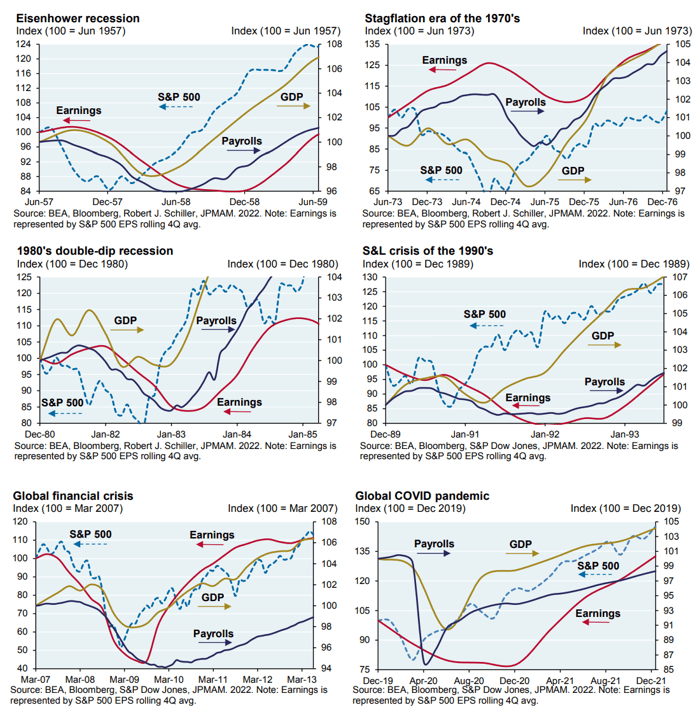
We were a minority voice in September and October expecting some relief in equity markets through year-end. In our podcast|videocast we covered this chart (below) which shows that by the time earnings actually decline to their lowest, the stock market has often ALREADY RECOVERED to (or near) NEW HIGHS:

bottoming

Twitter

As Warren Buffet says, “if you wait for the robins to sing, it’s already Spring (and you missed it).” So while managers are still sucking their thumbs sitting in cash, know that the “Pain Trade” is UP, not down (despite any short term noise). While everyone waits for the recession “that may have already happened” (in Q1-Q3) and the downward earnings revisions that accompany a recession, review the table above to see where stocks are BY THE TIME EARNINGS HAVE TROUGHED (hint: recovered).

Too many people are anchored by “recency bias” (google it), and believe that the market low MUST COME in March of next year because that’s what happened in 2020 and 2009 (whether they admit it consciously or not). It’s a fallacy and a trap. Anything is POSSIBLE (even new lows in March), but that scenario is not PROBABLE because everyone’s expecting it! More likely than not people will get left behind as no one is positioned for any possible good news and the BAD NEWS is already known (bears think they are seeing something that everyone doesn’t already know).

cash

BofA

I went into further detail on CNBC Closing Bell (Indonesia) on Friday regarding: Inflation, Fed, Election, Congress, Emerging Markets. Thanks to Fitria Anggrayni and Bramudya Prabowo for having me on.

Monday I joined Kori Hale from brokerage Public.com to discuss a great solid company/stock for 2023 (opinion, not advice see “terms” above). Thanks to Mike Teich and Kori for having me on.

Yesterday I joined Phil Yin on CGTN America to discuss Retail Sales, Earnings, the Holiday Season, Fed, Inflation and more. Thanks to Phil and Ryan Gallagher for having me on.

Sentiment

On Tuesday, I put out a summary of Bank of America’s monthly “Global Fund Manager Survey.” You can find it here:

Here were the 4 key takeaways:

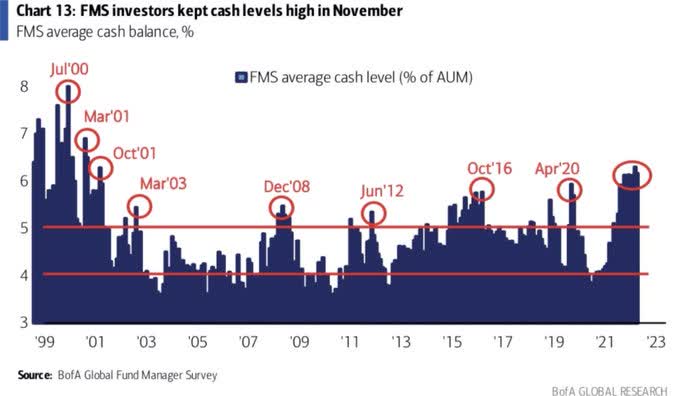
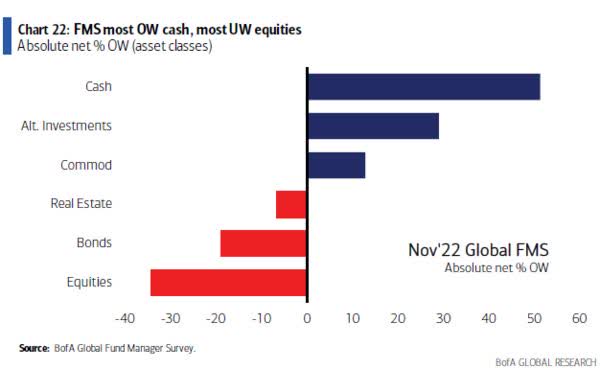
1) Managers are overweight cash and STILL underweight equities. The “pain trade” is still up. Markets don’t crash when everyone is expecting it:

overweight cash

BofA

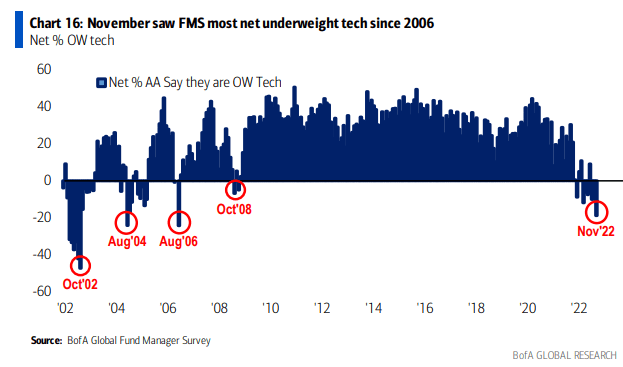
2) Managers are the most underweight Tech since 2008:

Underweight tech

BofA

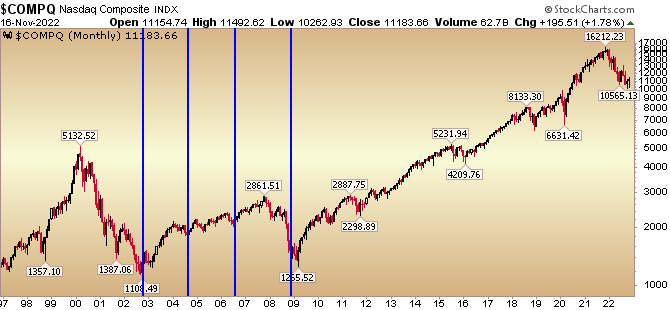
If you were buying high quality tech the last four times managers were this underweight, you made money (see blue lines to the month) below:

QQQ

Stockcharts

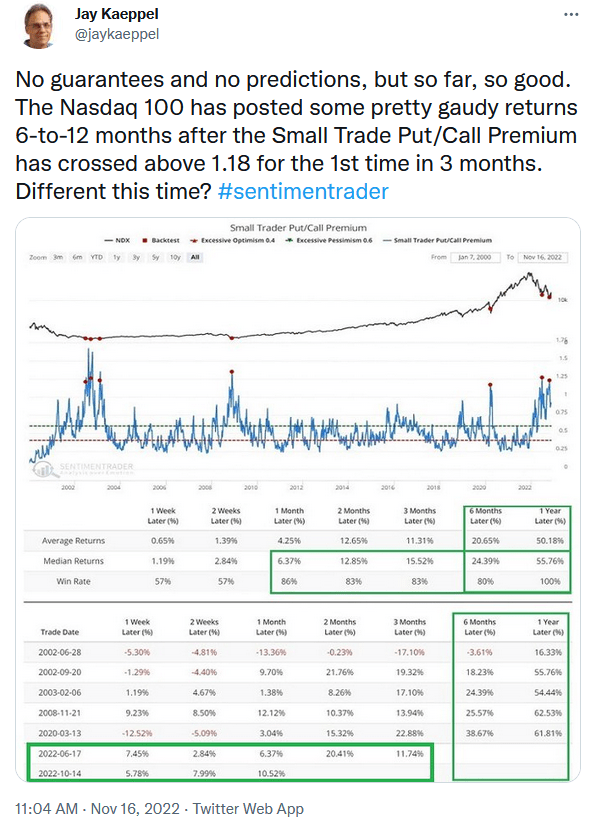
We added select tech/semis in decent size for client portfolios in October. It seems Warren Buffett had similar thinking with his recent $4B purchase of Taiwan Semi (TSM). While most investors were CONVINCED China would attack Taiwan imminently, Buffett swooped in to be “greedy when others were fearful.” This is also in line with a technical signal (we often look to) put out by Sentiment Trader today. Average return for Nasdaq each time this indicator hits (as it has now) is >50% 12 months out:

Jay kepel

Twitter

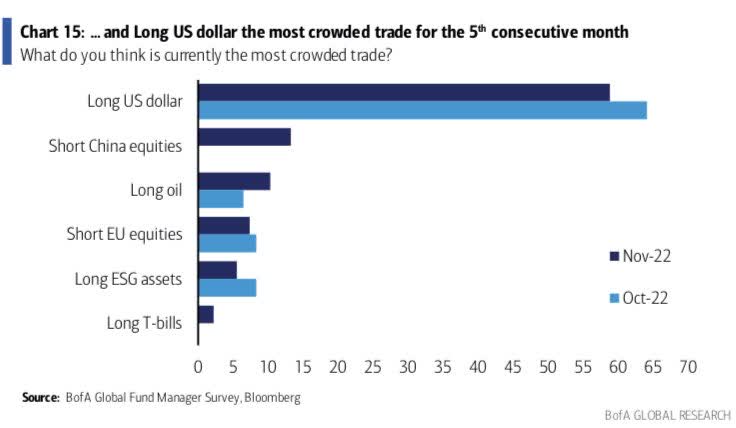
3. Long U.S. dollar is the most crowded trade among managers. Short China Equities is the second most crowded trade. Take the other side of both:

long usd

BofA

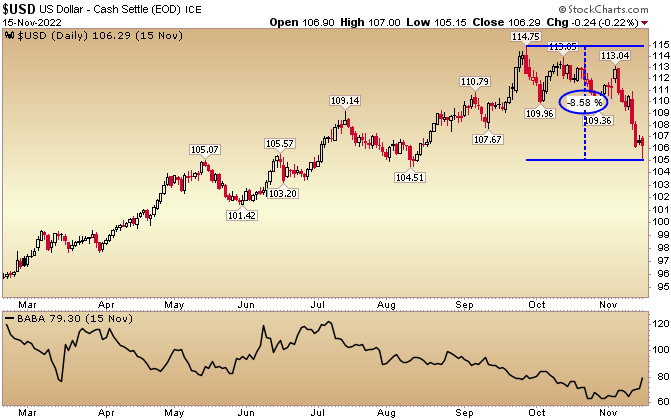
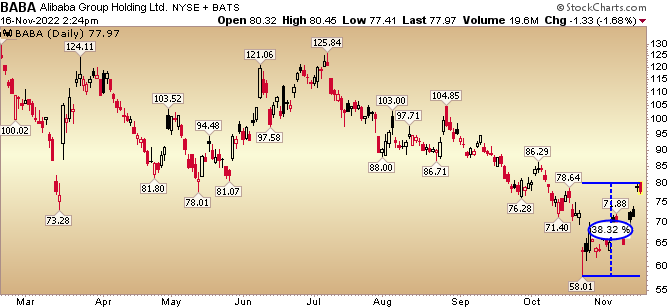
We’ve been pounding the table that it (dollar strength) was going to change soon due to our Commitment of Traders data (you may recognize the chart I put out in October in the context of “Dollar will drop and Chinese equities will rally”). Here’s how that is working so far:

USD

Stockcharts

baba

StockCharts

The dollar has fallen over 8% in recent weeks, and Alibaba (BABA, BABAF) is up ~38% off its lows. Expect this to continue in “fits and starts” based on short term noise, but the intermediate trend moving forward is UP. It has helped that President Xi has pivoted (Zero Covid, International Relations, Property Bailout) since securing his power domestically.

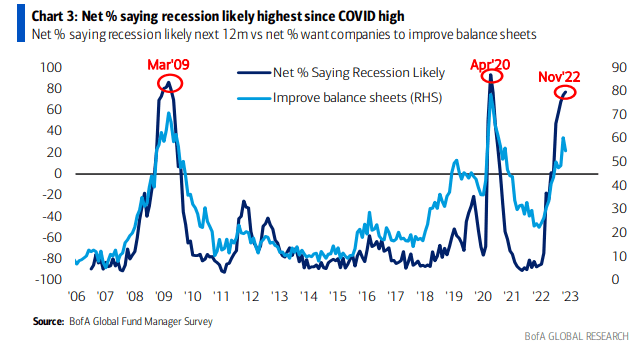
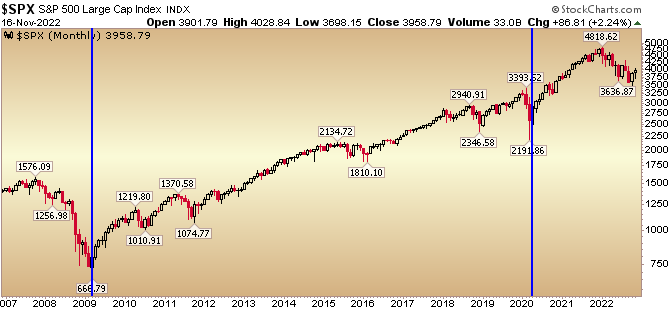
4) Managers are as scared of a recession today as they were in April 2020 and March 2020. While they were RIGHT to be scared, they were WRONG to be in record CASH as the stock market bottomed BEFORE the recession was declared (March 2009 bottom, March 2020 bottom):

Net % saying recession

BofA

SPX

StockCharts

Auto Supplier Update

This week we got some better-than-expected news on Cooper Standard when they announced their “Transaction Support Agreement.” They basically laid out what the new capital structure will look like. You can read the press release here. You can read the full agreement here.

Let me break down how I am understanding the changes in simple terms. Keep in mind they have a PIK toggle feature on the new debt – so at the company’s option – if they choose they can lower interest expense in the short term and pay it later when global production has recovered. Based on operating improvement and cash on hand, it is not clear they will need/choose to take advantage of that option. We will have greater clarity when the transaction is closed in December.

Long Term Debt (Before Agreement):

Description Maturity Date Terms Amount Issued
Term Loan November 2, 2023 Eurodollar + 275 $340MM
Senior Secured Notes June 1, 2024 13% $250MM
Senior Unsecured Notes November 15, 2026 5.625% $400MM
Total LT DEBT Outstanding: $978MM (Q3 2022)
TOTAL NET CASH INTEREST EXPENSE: FY 2021 $72.5MM

Long Term Debt (After Completed):

Description Maturity Date Terms Amount Issued
Senior Secured Notes 2027 5.625% (pik toggle option) $400MM
Senior Secured First Lien Notes 2027 13.5% (pik toggle option) $580MM
Total LT DEBT Outstanding: $980MM (Q1 2023)
~MAXIMUM NET CASH INTEREST EXPENSE (without PIK): FY 2023 ~$100.8MM

The good news is, there will likely be no maturities before 2027 – which gives the business plenty of time to recover. The bad news is, the interest expense increases up to ~$28.3MM per year. HOWEVER, IF NEEDED TO THEY CAN PIK TOGGLE FOR THE FIRST TWO YEARS (add to balance and pay less interest). Here’s how that works on the new Senior Secured First Lien Notes:

“The New First Lien Notes will bear interest at the rate of ((i)) 13.50% per annum, of which no less than 9.00% will be payable in cash and, at the Issuer’s option for the first four interest periods after issuance, the remaining 4.50% may be paid in cash or PIK (or a combination thereof), and ((II)) thereafter, 13.50% per annum, payable in cash.”

On the new Senior Secured Notes it will work like this:

“The New Secured Notes will bear interest at the rate of 5.625% cash pay per annum, or at the Issuer’s option for the first four interest periods after issuance, 10.625% in PIK, and thereafter, 5.625% per annum, payable in cash.”

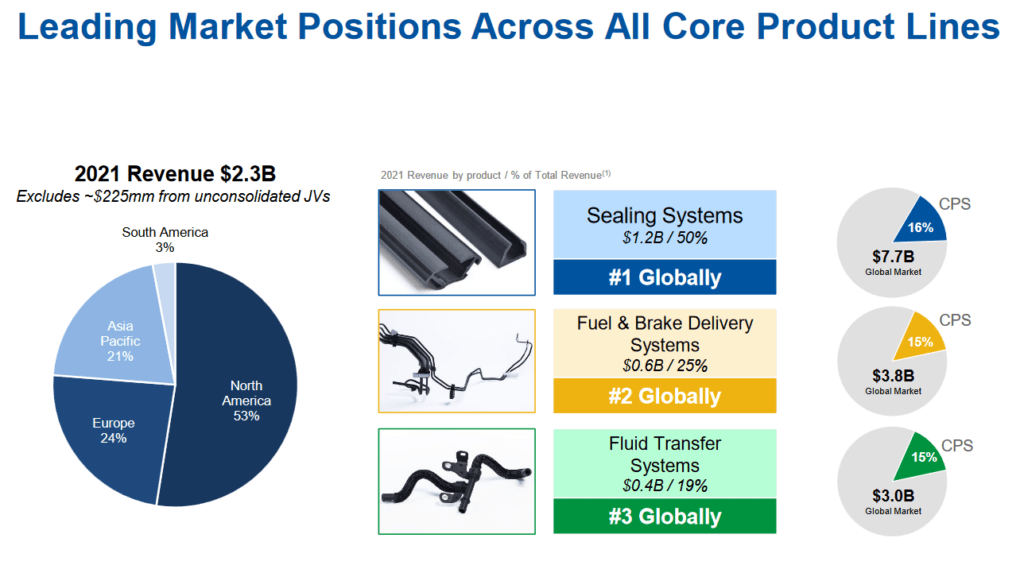
Based on their operational improvement, flow of semiconductors to OEMs, age of fleet (>13.1yrs old) and pent up demand for new cars, I do not think they will have/choose to PIK, but it’s nice that the option will be available in the short term. In this environment, I am amazed they were able to get everything done all at once NOW versus having to manage it over the next year((s)). Now they can get back to doing what they do BEST – leading the field in their 3 core categories.

market position

Cooper Standard

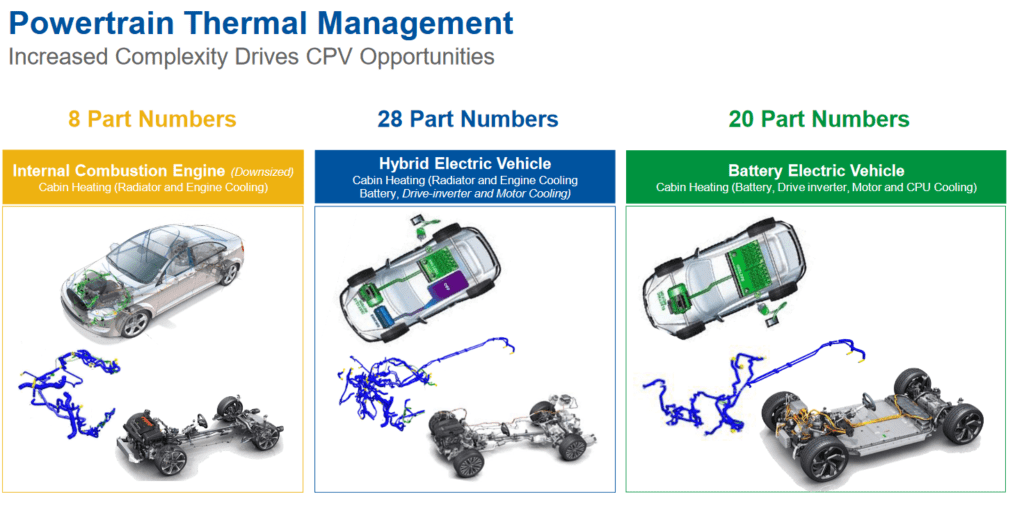
supporting

Cooper Standard

parts

Cooper Standard

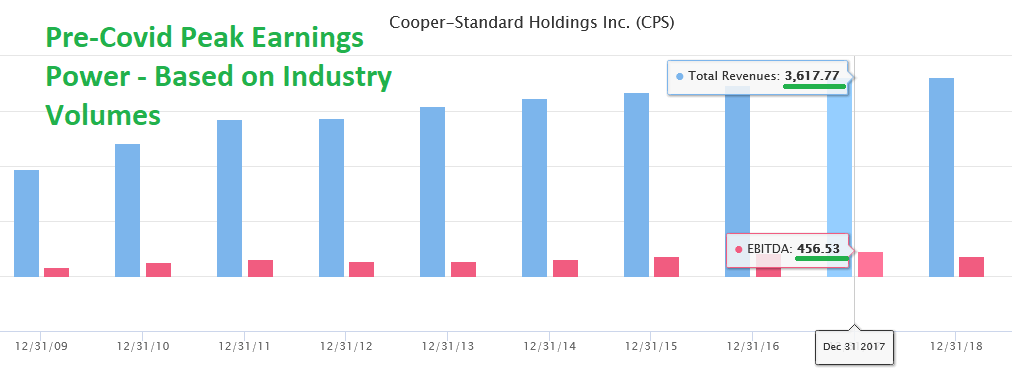
historical earnings

Cooper Standard

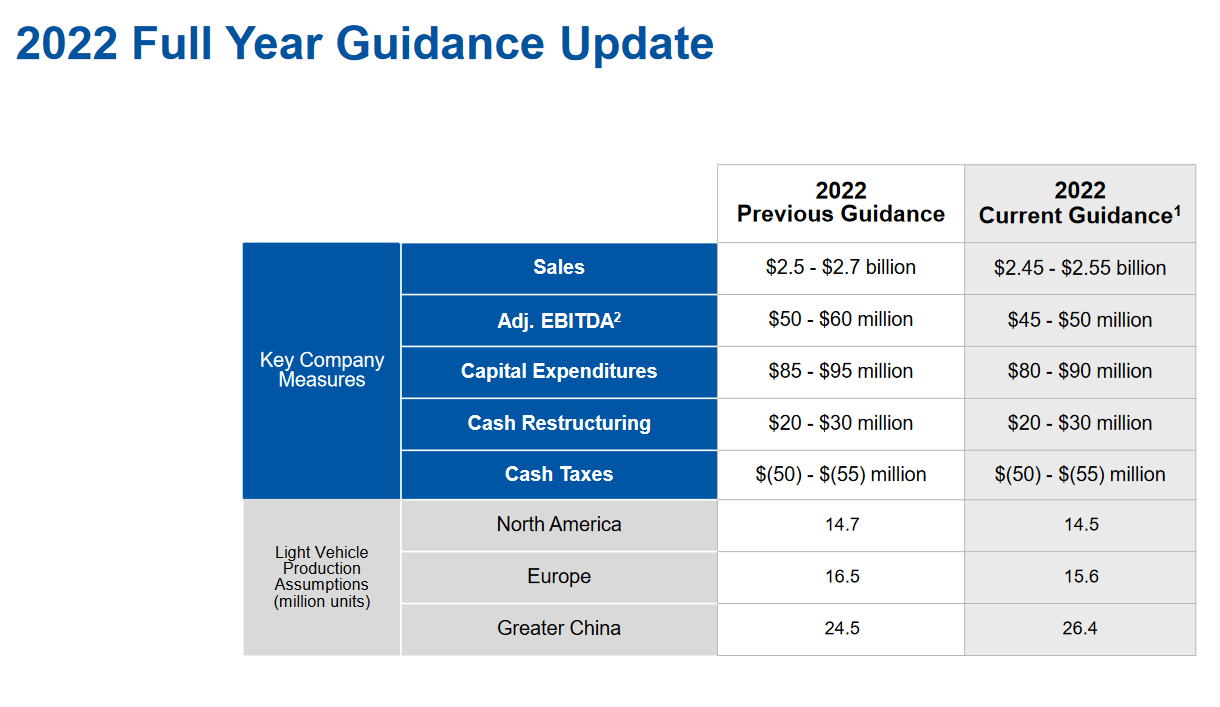
2022 guidance

Cooper Standard

production

Cooper Standard

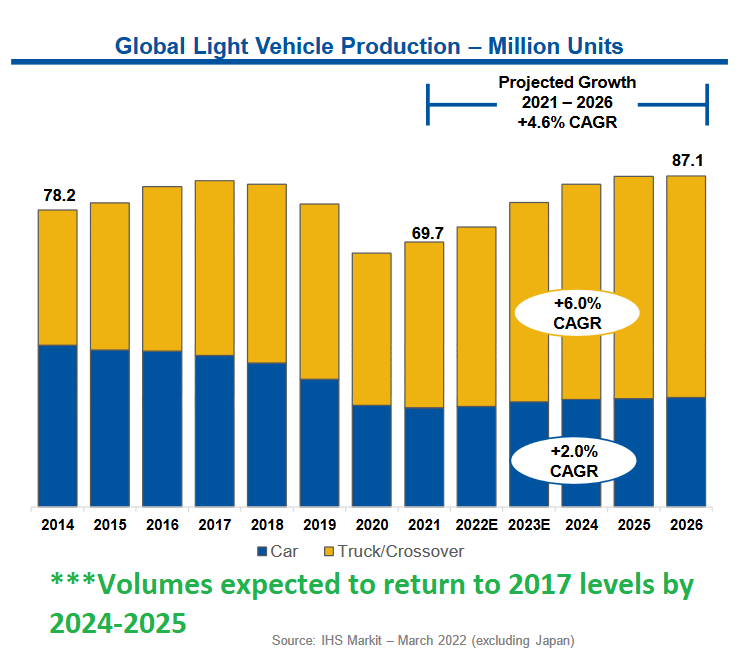
The most important table is the one above with the IHS estimates of Global Light Vehicle production. The key takeaway is that volumes are expected to return to 2017 levels by 2024 or 2025.

Here’s what Cooper Standard achieved in 2017:

$3.62B Revenues

$452M Adj. EBITDA (12.5% of revs)

$135M Net Income (3.73% of revs) ~18.78M fully diluted shares = ($7.21/share EPS)

Peak stock price on $7.21/share EPS was $146.78 (August 3, 2018) = ~20x P/E multiple.

Here’s what Cooper could achieve in 2024-2025 IF INDUSTRY VOLUMES MEET EXPECTATIONS AND RETURN TO 2017 LEVELS:

$3.3B Revenues (Anti-Vibration unit sold. $320M revenue 2017)

$412M Adj. EBITDA (12.5% of revs)

$123M Net Income (3.73% of revs) ~17.16M fully diluted shares = ($7.19/share EPS).

At 10x P/E = $71.90. At 2017 peak multiple = $146.37. Cut both in half and you’re still at a 5-10x+ bagger.

BUT, you say, EPS will be effected by increased interest expense. THAT IS CORRECT. Interest expense in 2017 was $42M, but TAXES were $74M. While the Interest expense in 2024 or 2025 will be ~$100M (assuming they don’t refinance at lower rates in coming year((s))), keep in mind they have $130MM in Deferred Tax Assets. They will just be moving into profitability and will be able to use a significant portion of that asset to dramatically reduce their cash tax obligation. In effect, it’s possible that EPS in 2024 or 2025 could be a tick higher than 2017 on the same volumes. The key will be what multiple is assigned (peak or trough)?

As I have said numerous times on our podcast|videocast, there are 3 key reasons I bought ownership in the company: 1) management respects equity (they have brought share count DOWN over the years), 2) management comp is tied to ROIC (return on invested capital) 3) the operating leverage in this business is unparalleled coming out of industry troughs.

*Past performance is no guarantee of future results. See “terms” above.

So if it’s such good news, why isn’t the stock up a lot more? While they have a committed backstop investor group, the deal still needs to get DONE. It will commence in December and upon completion I would imagine the stock will be materially higher – even before we see the massive operating improvement/leverage kick in in 2023 and beyond.

Here is the short term headwind disclaimer from the press release:

“The Company expects to commence the Exchange Offer, Concurrent Notes Offering and Consent Solicitation in December.

The commencement and consummation of the Refinancing Transactions contemplated by the TSA will be conditioned on the satisfaction or waiver of certain conditions precedent, including finalizing all definitive documents. The Refinancing Transactions may not be completed as contemplated or at all. If the Company is unable to complete the Refinancing Transactions or any other alternative transactions, on favorable terms or at all, due to market conditions or otherwise, its financial condition could be materially adversely affected.”

Now onto the shorter term view for the General Market:

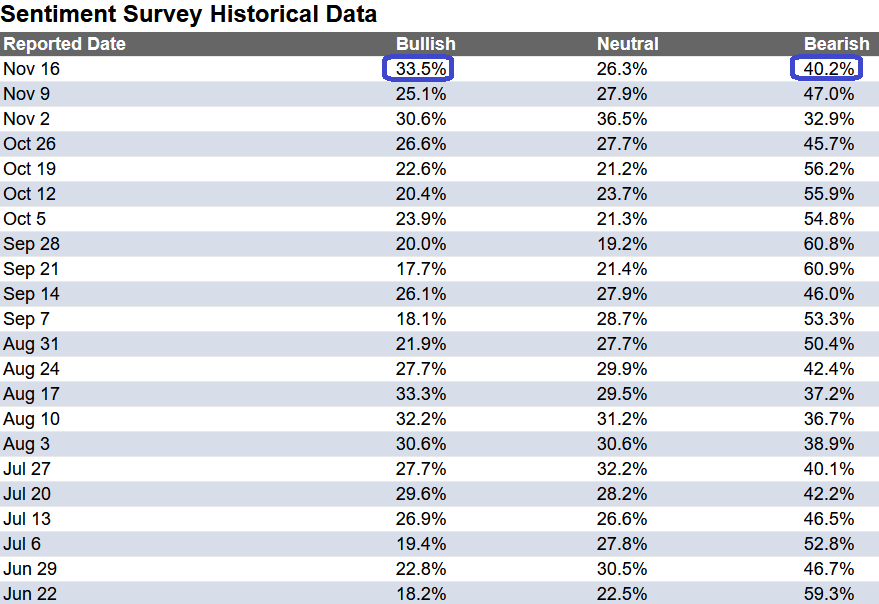
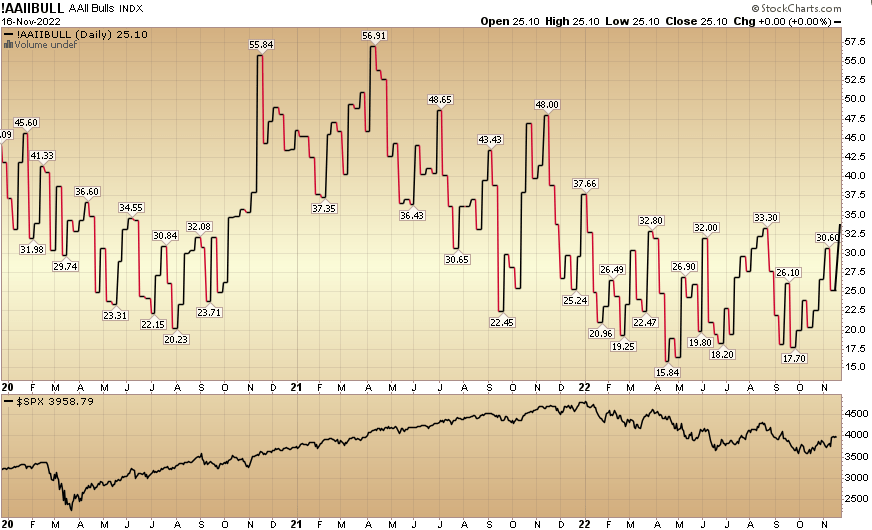
In this last week’s AAII Sentiment Survey result, Bullish Percent rose to 33.5% from 25.1% the previous week. Bearish Percent dropped to 40.2% from 47%. Sentiment is improving.

survey

NAAIM

AAII Byull

Stockcharts

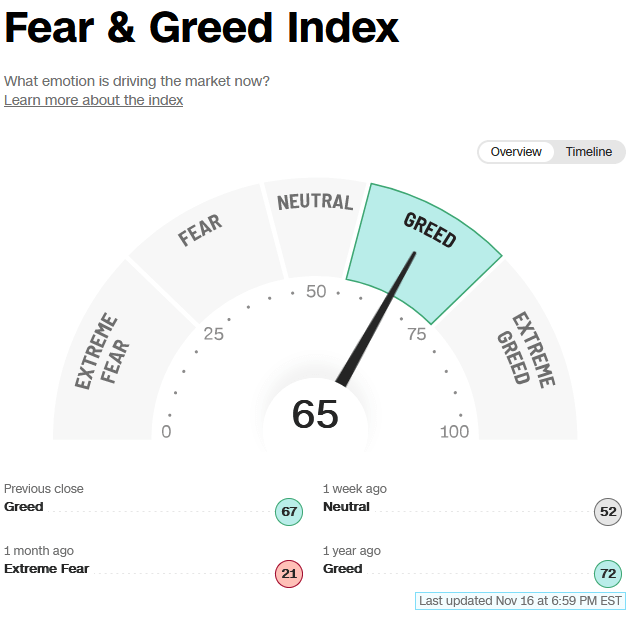
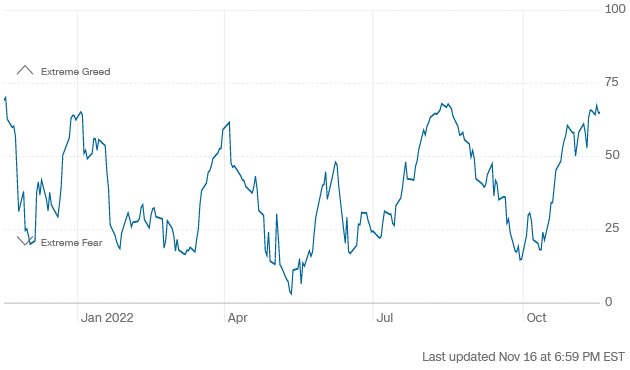
The CNN “Fear and Greed” ticked up from 53 last week to 65 this week. Sentiment is improving.

Fear and Greed

CNN

FEAR AND GREED

CNN

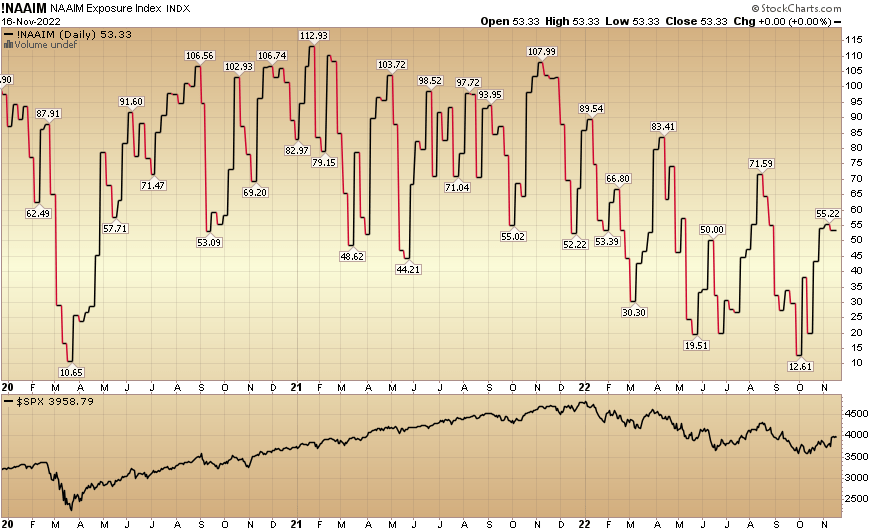
And finally, the NAAIM (National Association of Active Investment Managers Index) ticked down to 53.33% this week from 55.22% equity exposure last week.

NAAIM

Stockcharts

Techyrack Website stock market day trading and youtube monetization and adsense Approval

Adsense Arbitrage website traffic Get Adsense Approval Google Adsense Earnings Traffic Arbitrage YouTube Monetization YouTube Monetization, Watchtime and Subscribers Ready Monetized Autoblog


from Stock Market News – My Blog https://ift.tt/51qcL2g
via IFTTT
https://static.seekingalpha.com/uploads/2022/11/17/saupload_JPM-1.png
https://stockinvesthub.blogspot.com/2022/11/the-pain-trade-stock-market-and.html

Here’s How Much a $1,000 Investment in Bitcoin a Year Ago Would Be Worth Now – Money

Let’s hope you didn’t jump on the bitcoin bandwagon a year ago. If you bought $1,000 worth of bitcoin when prices peaked in November 2021, your investment would be valued at only about $250 today.

On Friday, one bitcoin cost about $16,700. The price has declined by more than 75% since it reached a record high of $68,790 on Nov. 10, 2021, according to CoinMarketCap.

Ether, the native token of the Ethereum blockchain network and the second largest cryptocurrency, is down about the same percentage since its all-time high, also in November 2021.

Bitcoin has gone through crashes like this before. In December 2017, the crypto reached a then-record high just above $20,000, and its price skidded all the way down to $3,191 the following December, an 84% decline.

The cryptocurrency has posted two declines of more than 50% in the past three years — first when the pandemic threw the global economy into upheaval in March 2020, and then again during a downturn after bitcoin hit a then-record price above $64,000 in April 2021.

The bitcoin crash of 2022 is just the latest reminder of the risks associated with investing in cryptocurrency, given its extreme volatility.

Of course, only the unluckiest of investors who bought at the peak are actually down 75% on their investments. And pretty much no matter where you’ve been investing, including the S&P 500, your portfolio is probably down this year. It’s also important to note that for long-term investors, these are just losses on paper. You only realize a loss when you sell.

Ads by Money. We may be compensated if you click this ad.AdAds by Money disclaimer

Looking to Invest in Gold?

If you’re searching for a hedge against inflation, start buying gold coins, bars, and/or bullions. It’s as simple as clicking on your state now.

HawaiiAlaskaFloridaSouth CarolinaGeorgiaAlabamaNorth CarolinaTennesseeRIRhode IslandCTConnecticutMAMassachusettsMaineNHNew HampshireVTVermontNew YorkNJNew JerseyDEDelawareMDMarylandWest VirginiaOhioMichiganArizonaNevadaUtahColoradoNew MexicoSouth DakotaIowaIndianaIllinoisMinnesotaWisconsinMissouriLouisianaVirginiaDCWashington DCIdahoCaliforniaNorth DakotaWashingtonOregonMontanaWyomingNebraskaKansasOklahomaPennsylvaniaKentuckyMississippiArkansasTexas

START INVESTING TODAY

Why is bitcoin down this year?

Crypto and stocks have often followed the same pricing trends in 2022. Both asset classes have been impacted by high inflation, which prompted higher interest rates as well as recession concerns, says Alkesh Shah, a global crypto and digital asset strategist at Bank of America.

But crypto’s declines have been steeper this year than those of other investment categories that are considered risk assets, like tech stocks, which are down about 30% this year, Shah says. It’s a different story, however, if you look farther back in time.

“On a two-year basis, the cryptocurrency sector is up over 300% versus say software technology stocks that are up 35% over the last two years,” he says. “So it’s a significantly outperforming group on a two-year basis, but it definitely corrected this year along with the other risk assets.”

Bitcoin specifically is actually down about 5% over the past 24 months. But if you invested in bitcoin four years ago, you would have tripled your money.

Crypto exchange concerns — and shifts to crypto wallets

With crypto prices down more than stock prices this year — but up more than stocks over longer time frames — both crypto’s fanatics and its doubters have fodder to make their arguments.

“It depends on how you want to view it, and it seems like the situation gives everybody something to talk about, but certainly given the events that have happened with FTX’s bankruptcy, the crypto skeptics are certainly the loudest at this point,” Shah says.

Even before the recent collapse of the major crypto exchange FTX, Shah says crypto prices were impacted this year by the bankruptcy of crypto hedge fund Three Arrows (3AC) and the lending platform Voyager Digital, as well as challenges for another crypto lender, BlockFi, which is now preparing a potential bankruptcy filing, according to the Wall Street Journal.

“3AC, Voyager and BlockFi all ran into problems and then they had to unwind their positions, which then caused more pressure on bitcoin,” Shah says.

The price of bitcoin hasn’t crashed further amid the FTX fiasco, but there has been a trend of investors pulling their funds out of crypto exchanges and moving them over to crypto wallets, according to Shah. Some people are worried about having their money in exchanges, fearing that others could go under.

“Right now, the trend post-FTX is not that bitcoin is going down,” Shah says. “It’s people moving bitcoin off of the exchanges and putting it into wallets.”

Ads by Money. We may be compensated if you click this ad.AdAds by Money disclaimer

Worried about protecting your hard-earned financial assets?

Gold IRAs help you protect your investments by providing the asset diversification and stability you need. Click below to start investing today!

Invest in Gold

More from Money:

5 Best Crypto Exchanges of November 2022

‘Huge Shock to the System’: What the FTX-Binance Drama Means for Crypto Investors

Gen Z and Millennial Investors Want Crypto and Alts in Their 401(k)s


from Bitcoin – My Blog https://ift.tt/w0FBQva
via IFTTT
https://s3.money.com/prd/image/image/15240/163e573e-202a-466a-b8b8-93da65db2b13.png
https://stockinvesthub.blogspot.com/2022/11/heres-how-much-1000-investment-in.html

‘There is no such thing as a such factor as a free lunch.’ 4 classes for crypto traders from the FTX collapse – CNBC

Bahamas-based crypto alternate FTX filed for chapter within the U.S. on Nov. 11, 2022, searching for courtroom safety because it appears ...